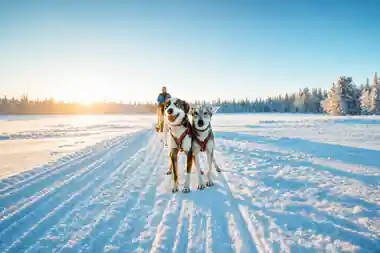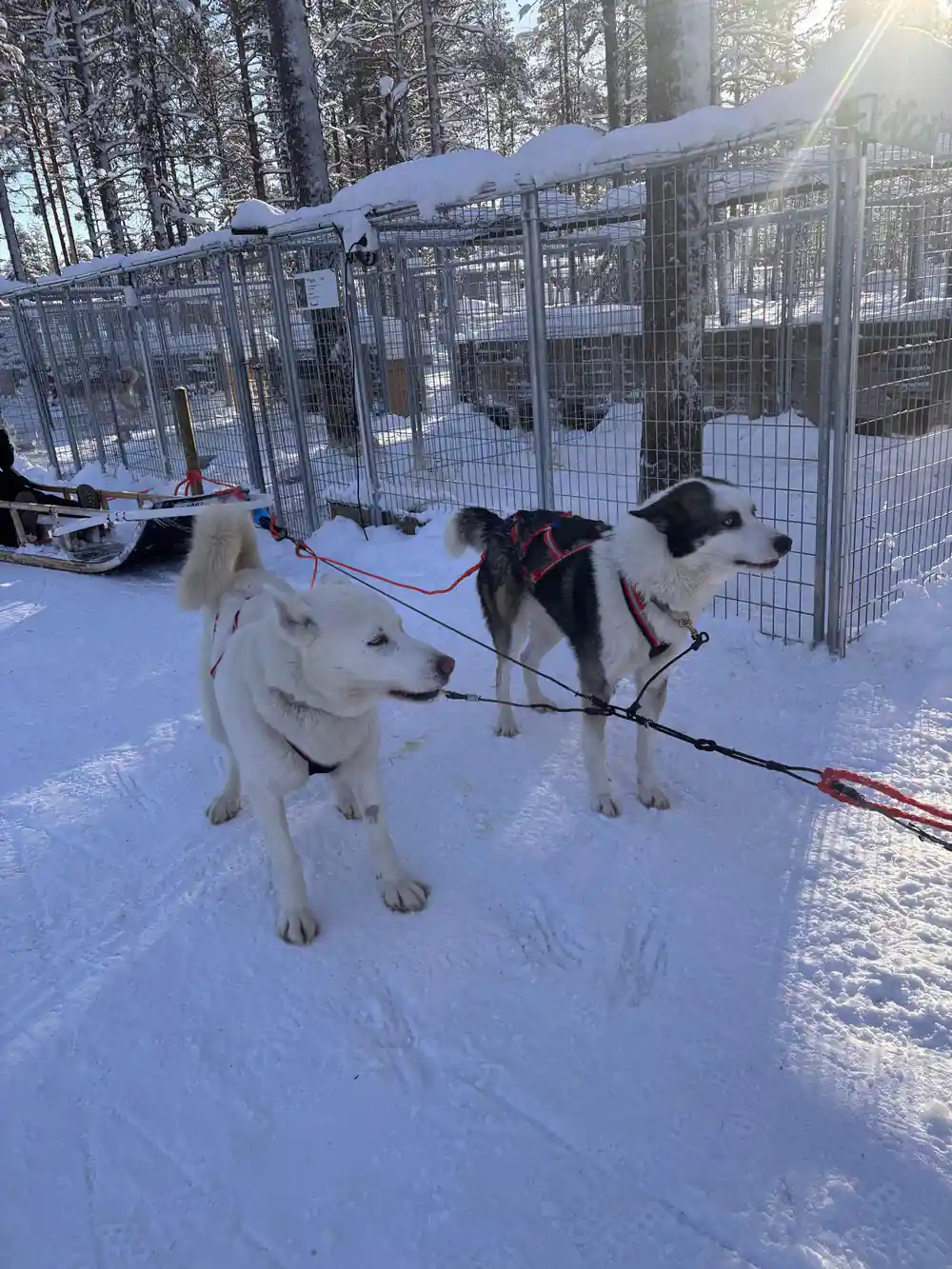
The quick version
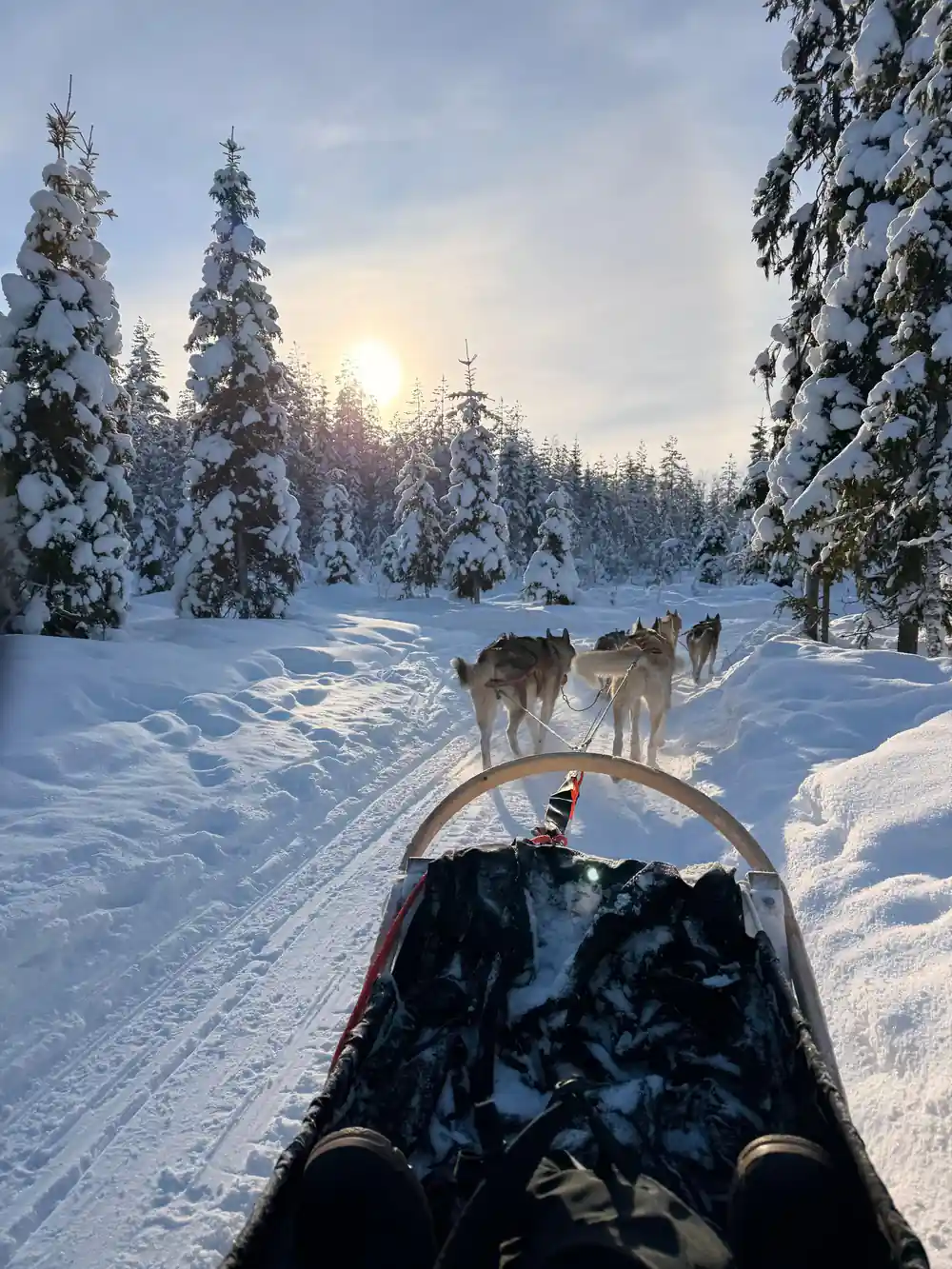
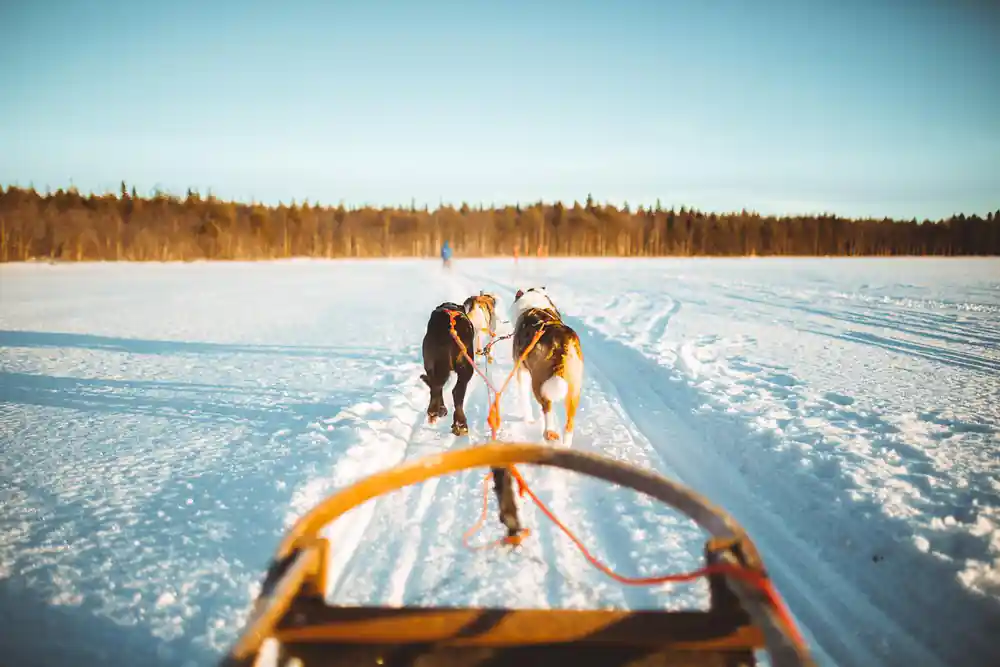
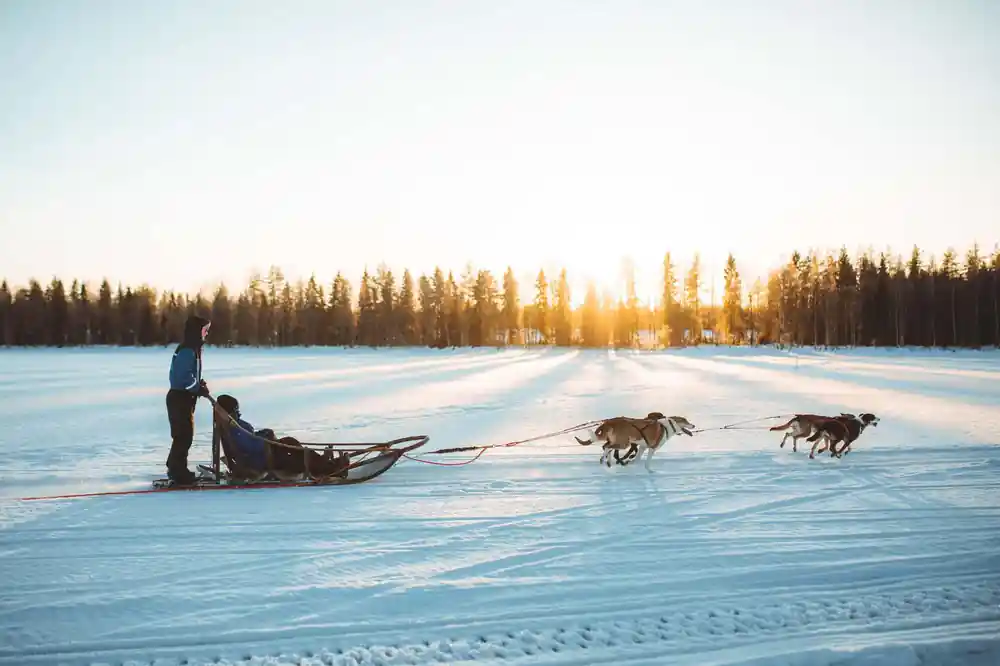
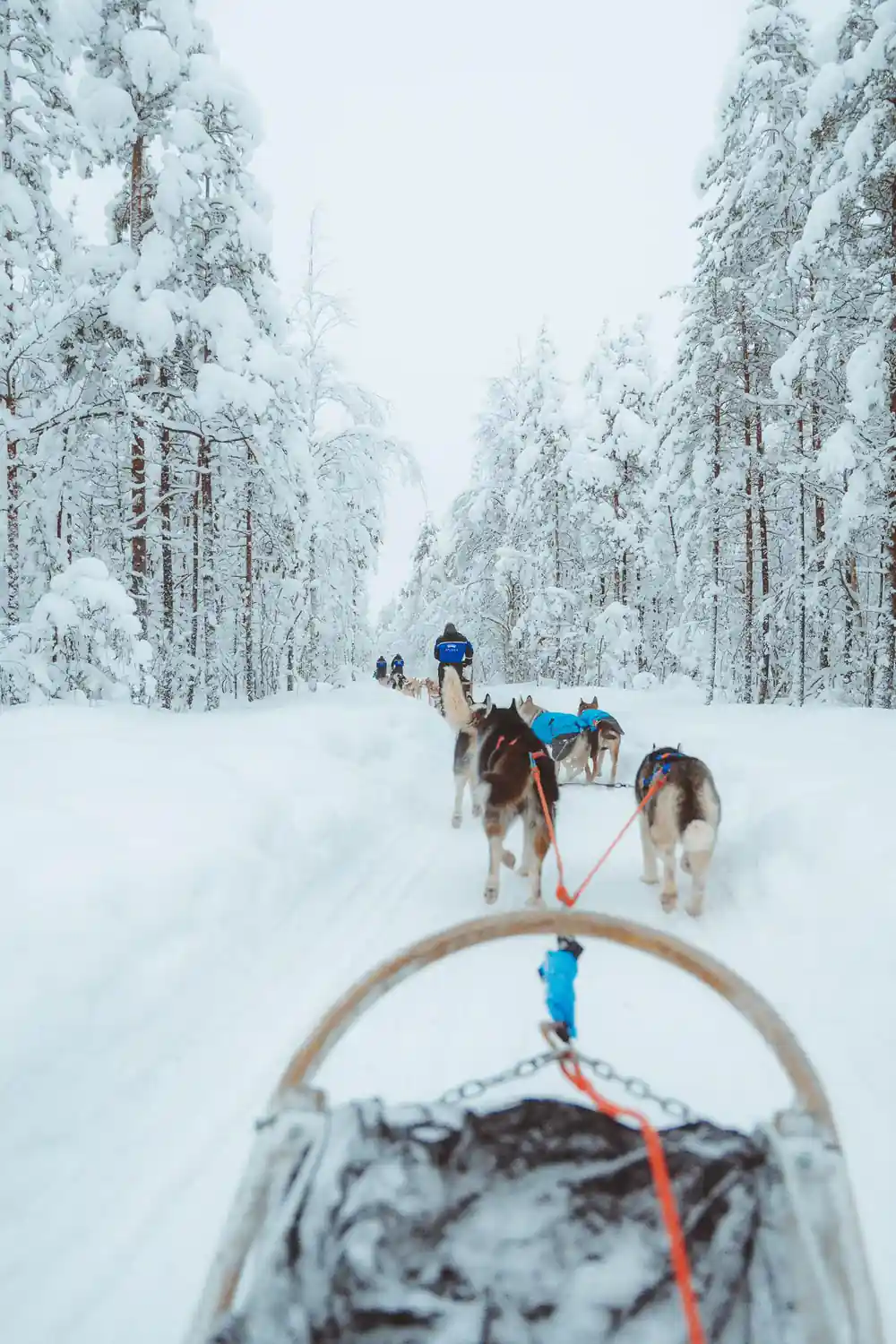
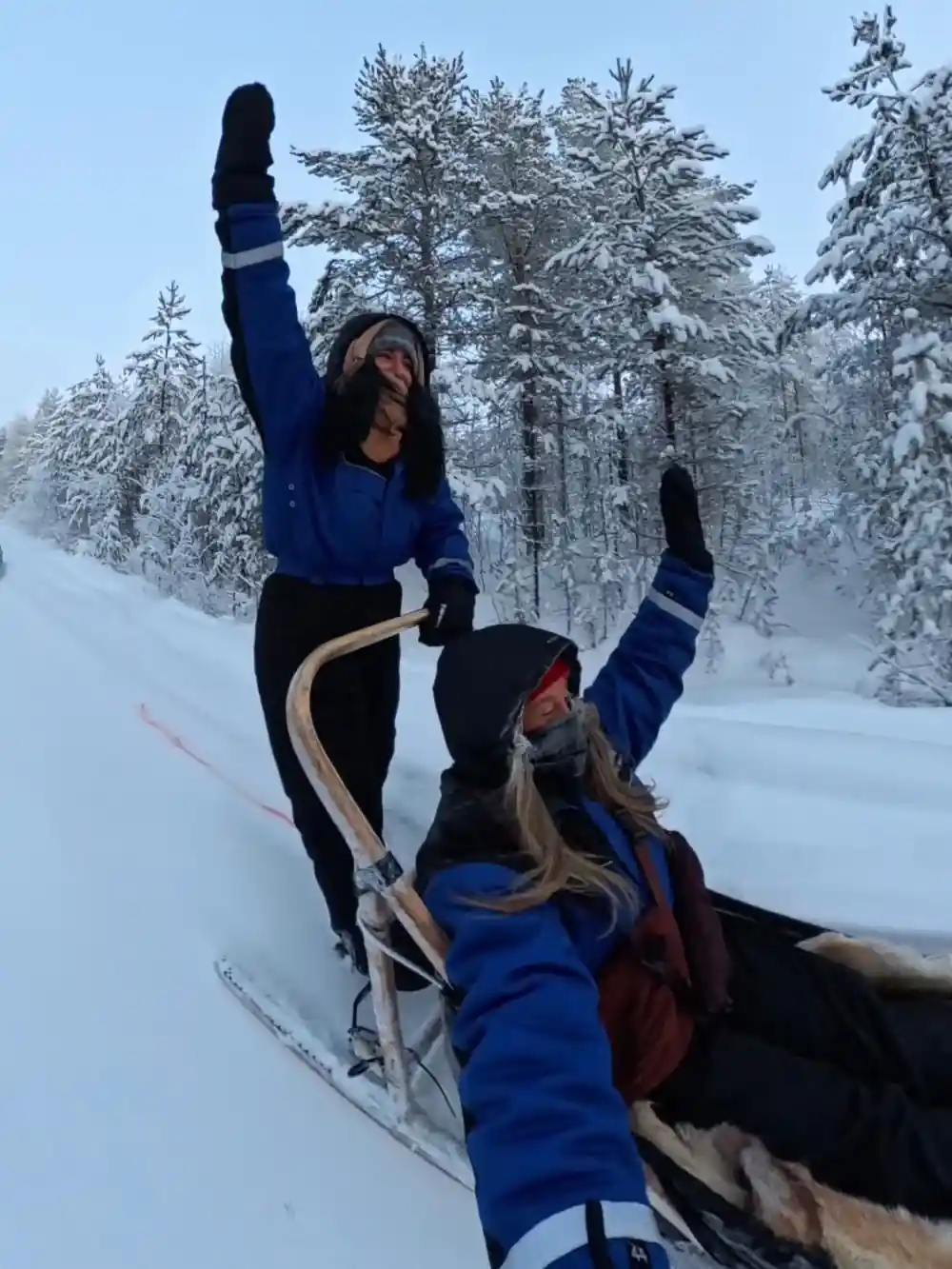
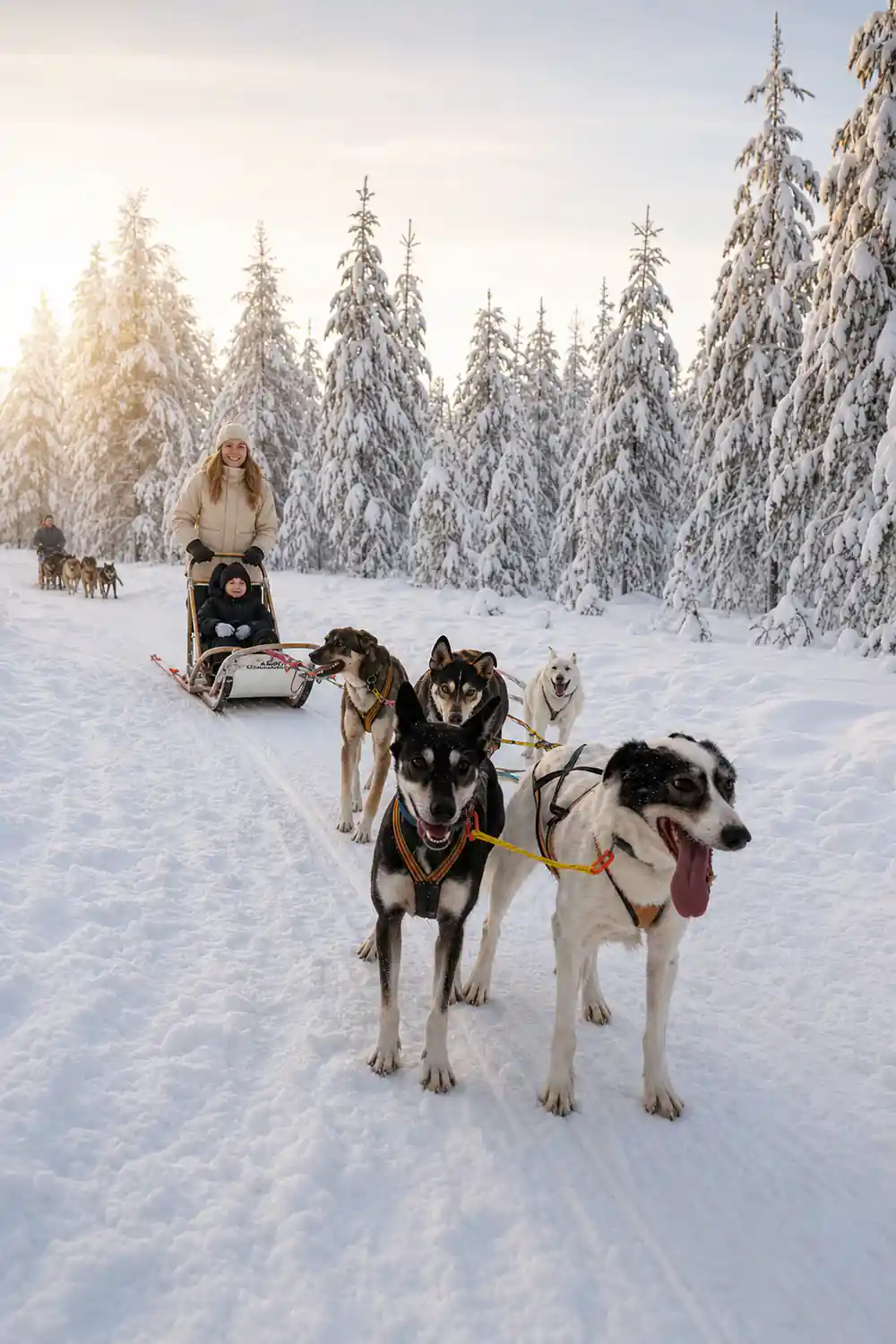
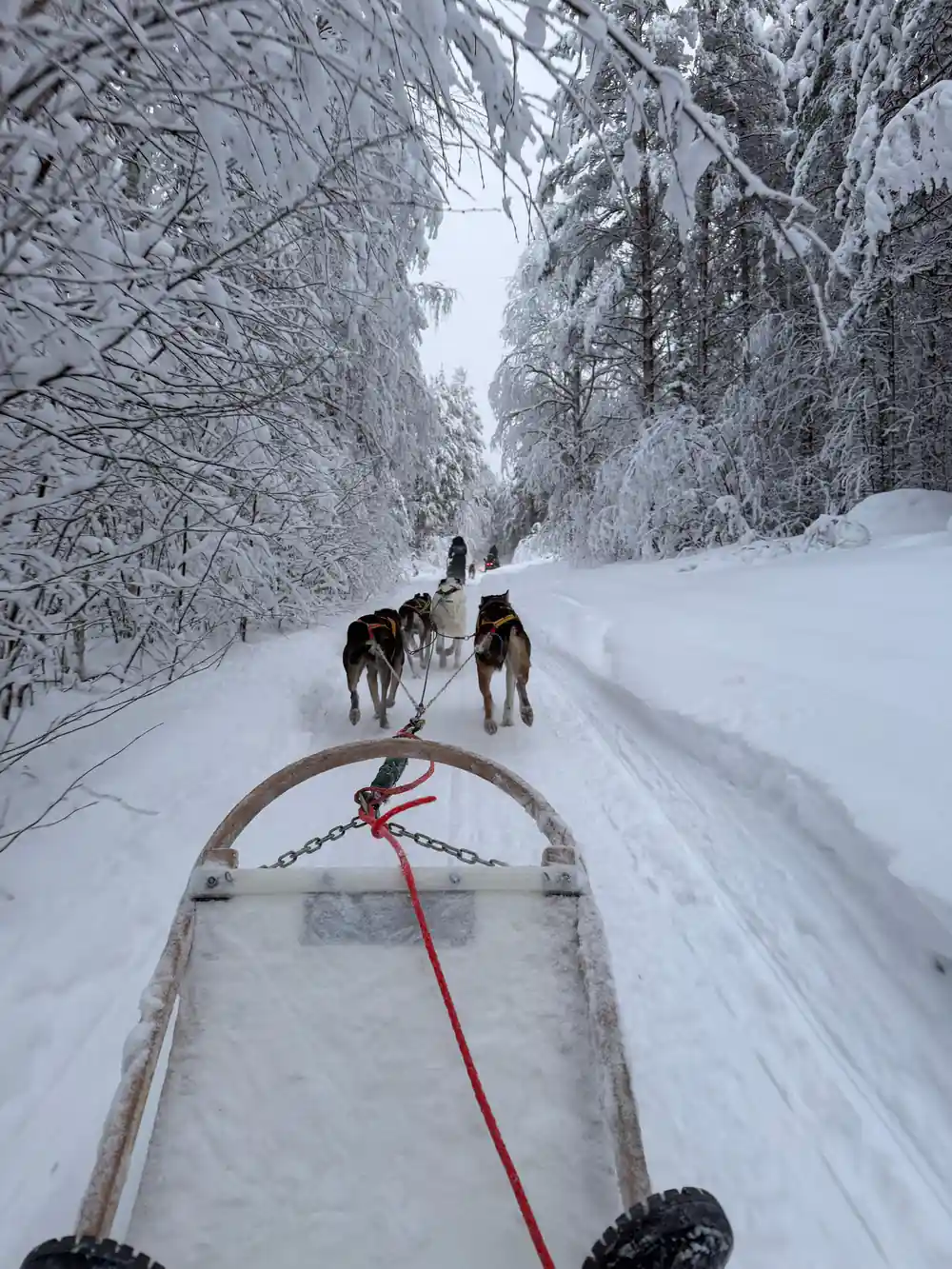
- You stand on the sled's runners controlling pace and direction. Your feet and hands manage everything from start to finish across the 6 km trail.
- Learn to operate the foot brake for slowing down and the snow anchor for stopping. Both are essential techniques you'll use throughout the ride.
- Your voice guides the team. Simple commands direct the huskies' movement, giving you real control over how they respond on the trail.
- Halfway through, you and your partner exchange positions on the sled. The guides manage this changeover so both of you get equal time driving.
- Professional guides are with you throughout, handling navigation and safety while you focus on the core skills of mushing your team.
Your Safety Briefing Before Departure
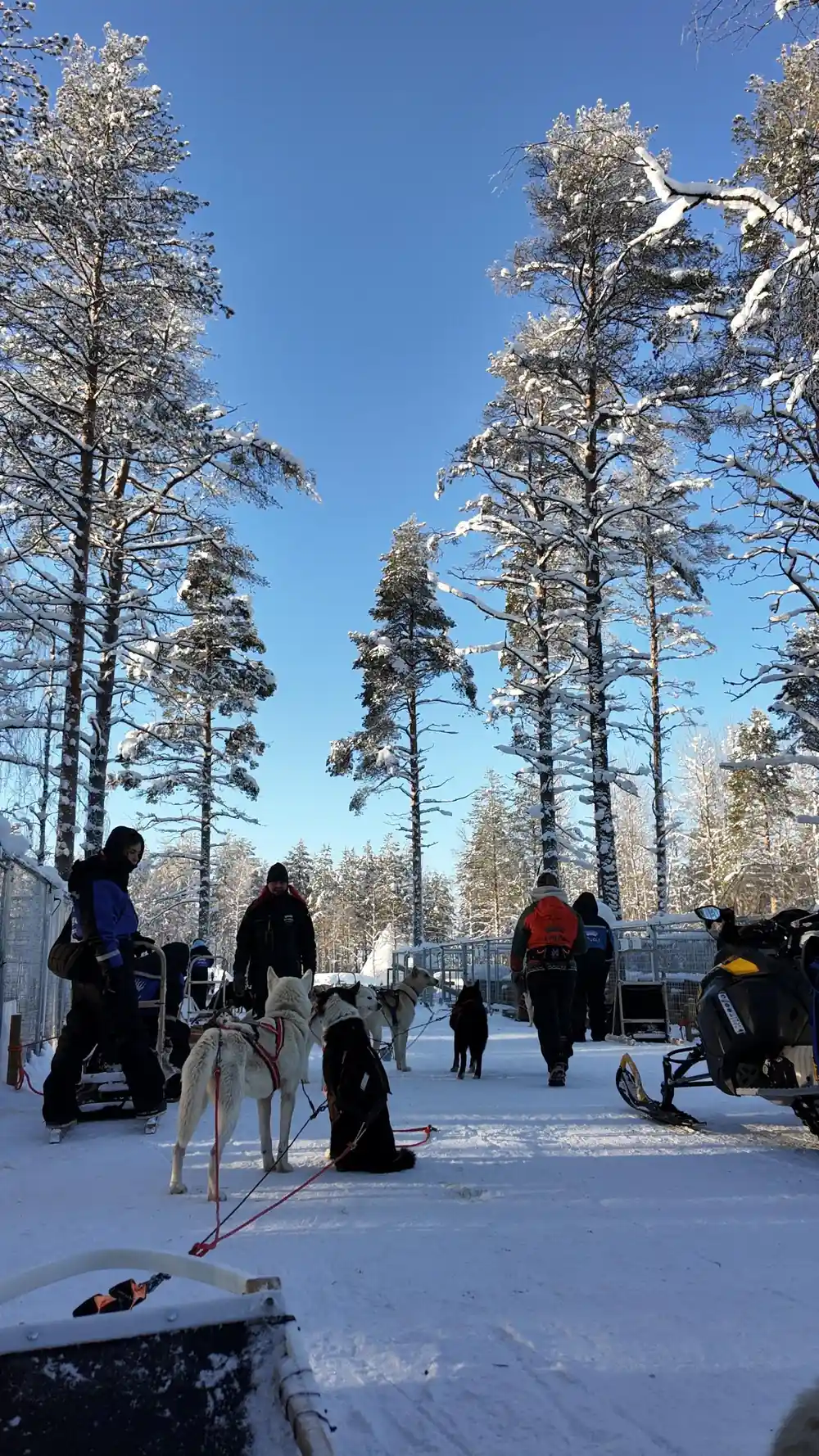
Before you step onto the runners, Apukka's team walks you through everything you need to know to drive your husky sled safely. This briefing covers the equipment, how to stand, how to hold the handlebar, and what to do in different situations. You'll learn the correct posture to maintain balance as the dogs pull, and why your feet matter as much as your hands. The briefing is thorough because sledging in Rovaniemi's winter conditions demands respect for both the dogs and the terrain. Pay close attention to how the team demonstrates each technique, because you'll be using these skills on the 6 km trail ahead.
The guides explain the snow conditions you'll encounter and what that means for braking and steering. They show you where your weight should be on the sled, how to shift it during turns, and how to stay stable when the team accelerates. Safety isn't presented as a list of rules but as practical knowledge that makes the experience better and easier. By the time the briefing ends, you'll understand why each instruction matters and how it connects to controlling your team.
How the Brake System Works
Your husky sled has two main stopping mechanisms, and knowing the difference between them is essential. The brake is a metal claw or toothed plate that you operate by stepping down on a pedal at the back of the runners. When you press it, the teeth dig into the snow and create immediate friction. This is your primary tool for slowing down on flat sections or gentle slopes. The brake gives you gradual control, and you can modulate the pressure to slow the team without jerking the line. During your briefing, you'll practice the pressure needed to slow without stopping completely, and the pressure needed to come to a full halt.
The snow anchor, by contrast, is an emergency tool. It's a larger metal hook or spike that you deploy by shifting your weight and pushing a lever or handle. The anchor digs deep into packed snow and will stop the sled even if the dogs are pulling hard. You won't use the anchor during normal driving; it's there for situations where the brake alone isn't enough, such as on a steep downhill section or if you lose your footing. Understanding when to use the brake and when to reach for the anchor is part of what makes sledging Rovaniemi safe and controlled.
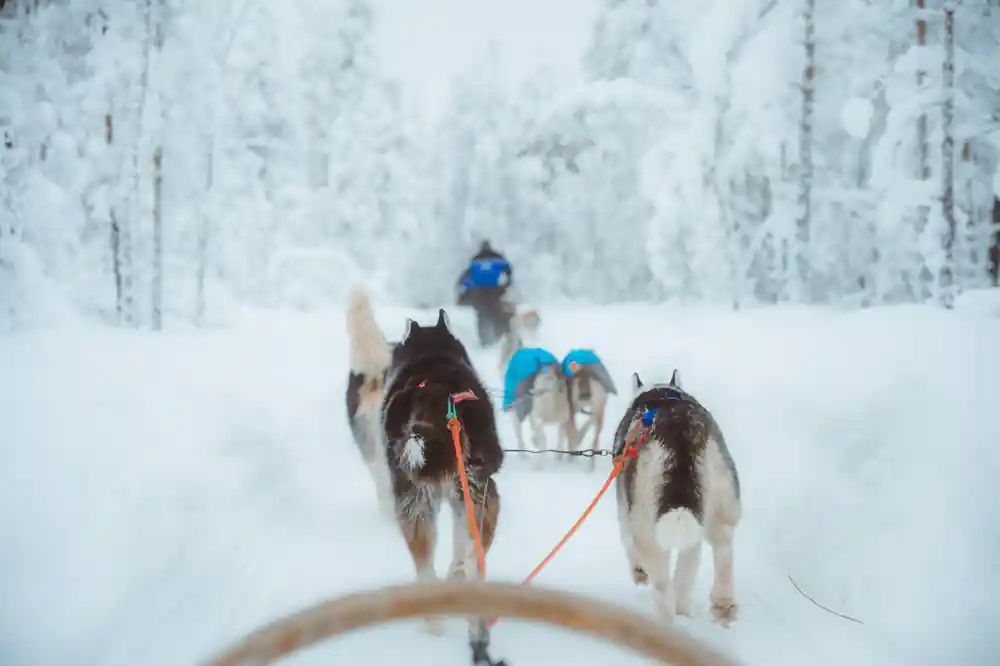
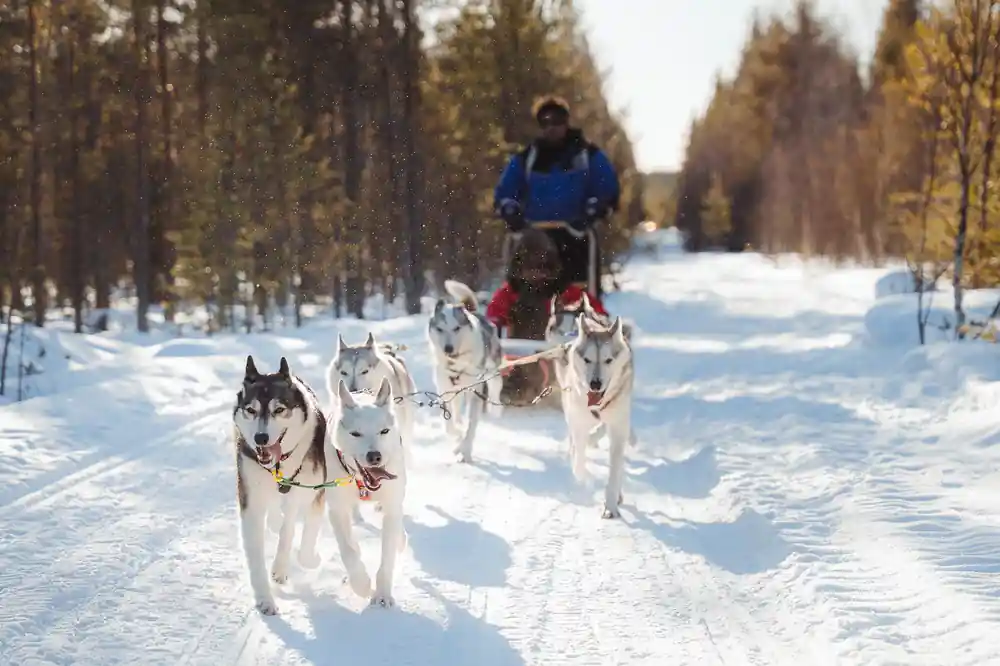
The Commands Your Huskies Respond To
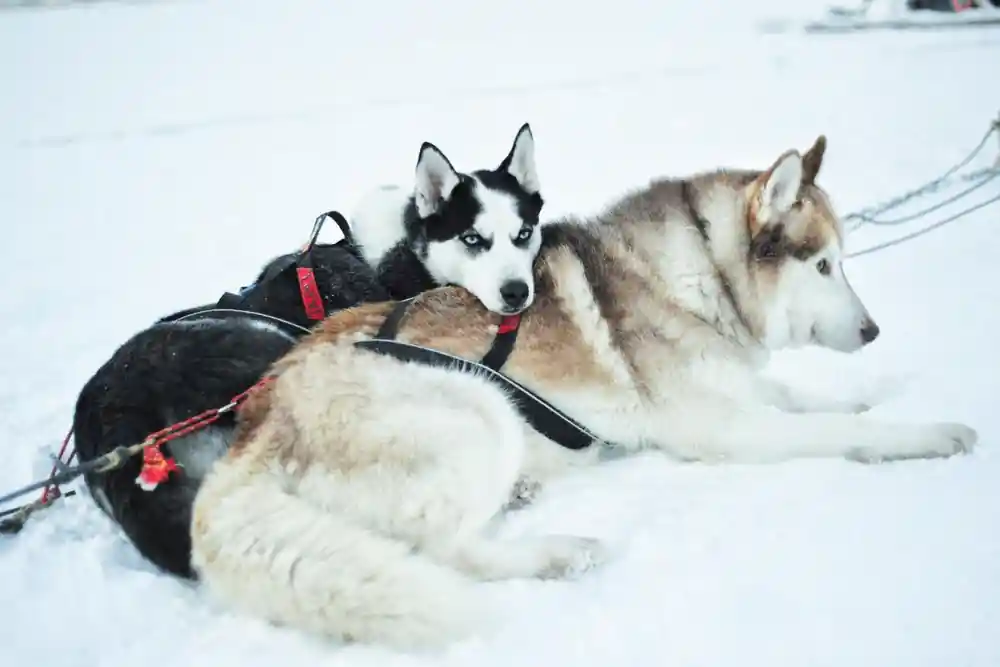
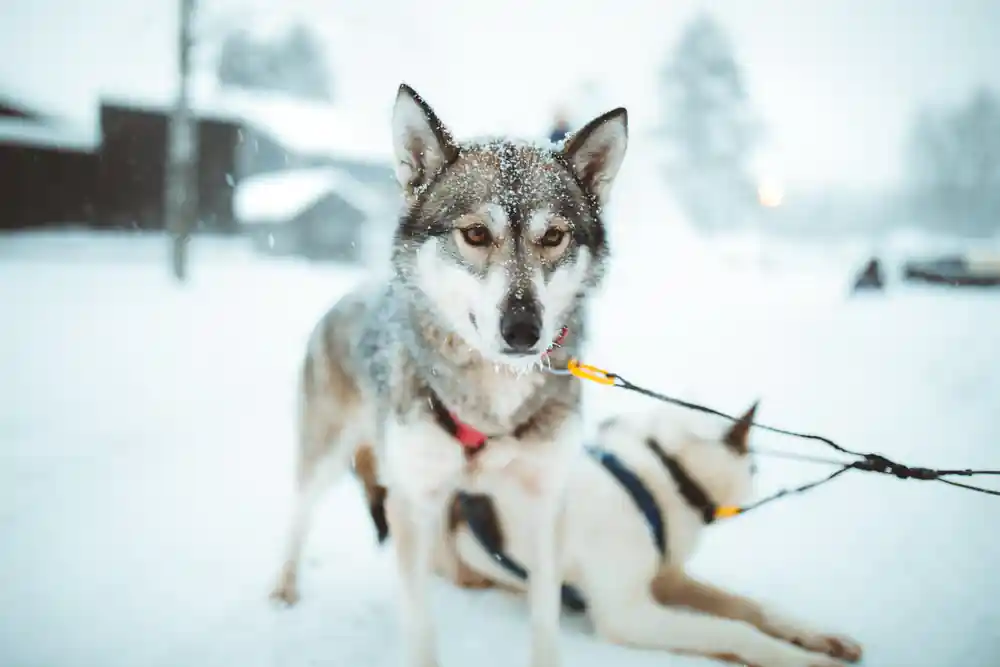
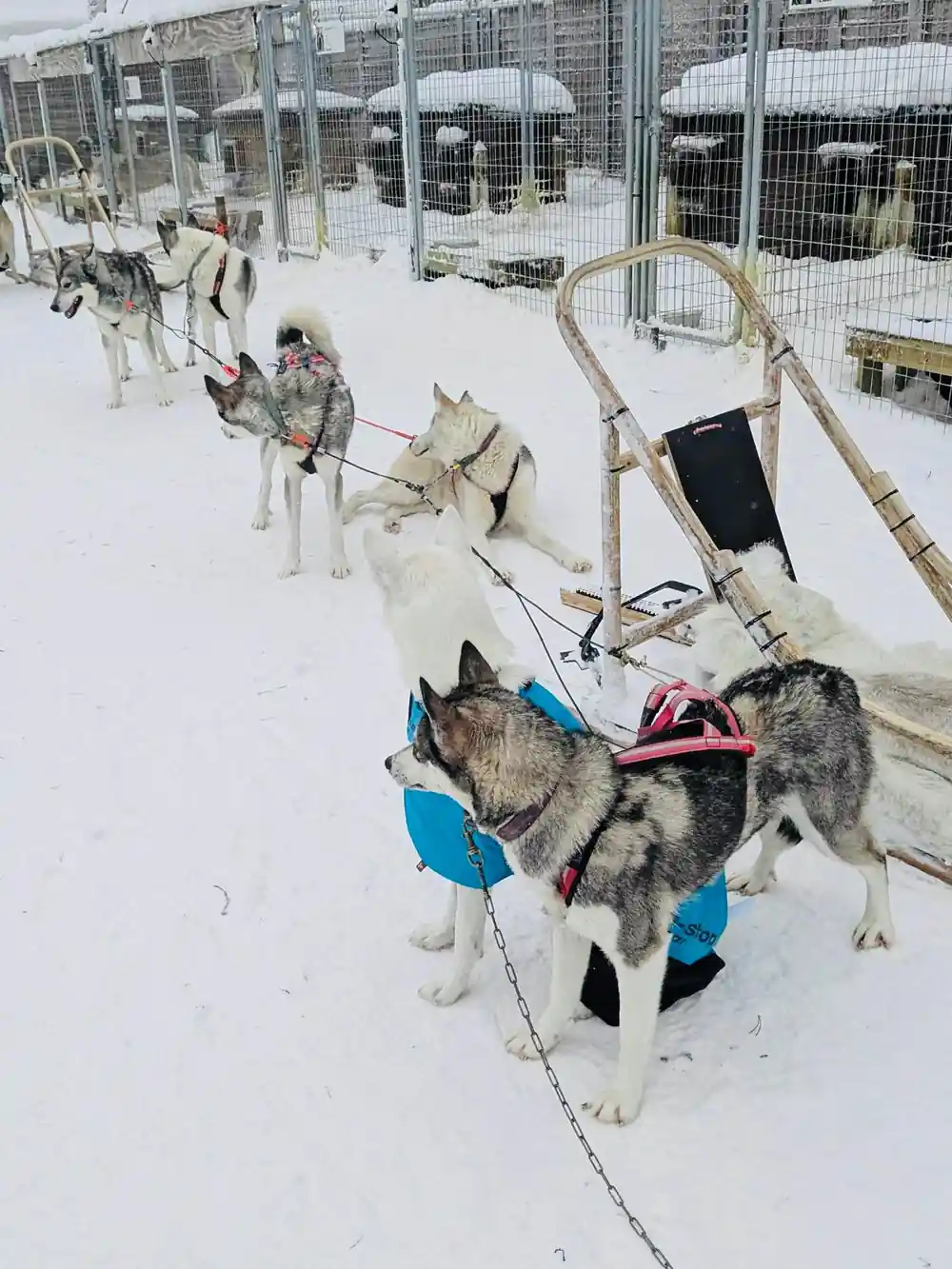
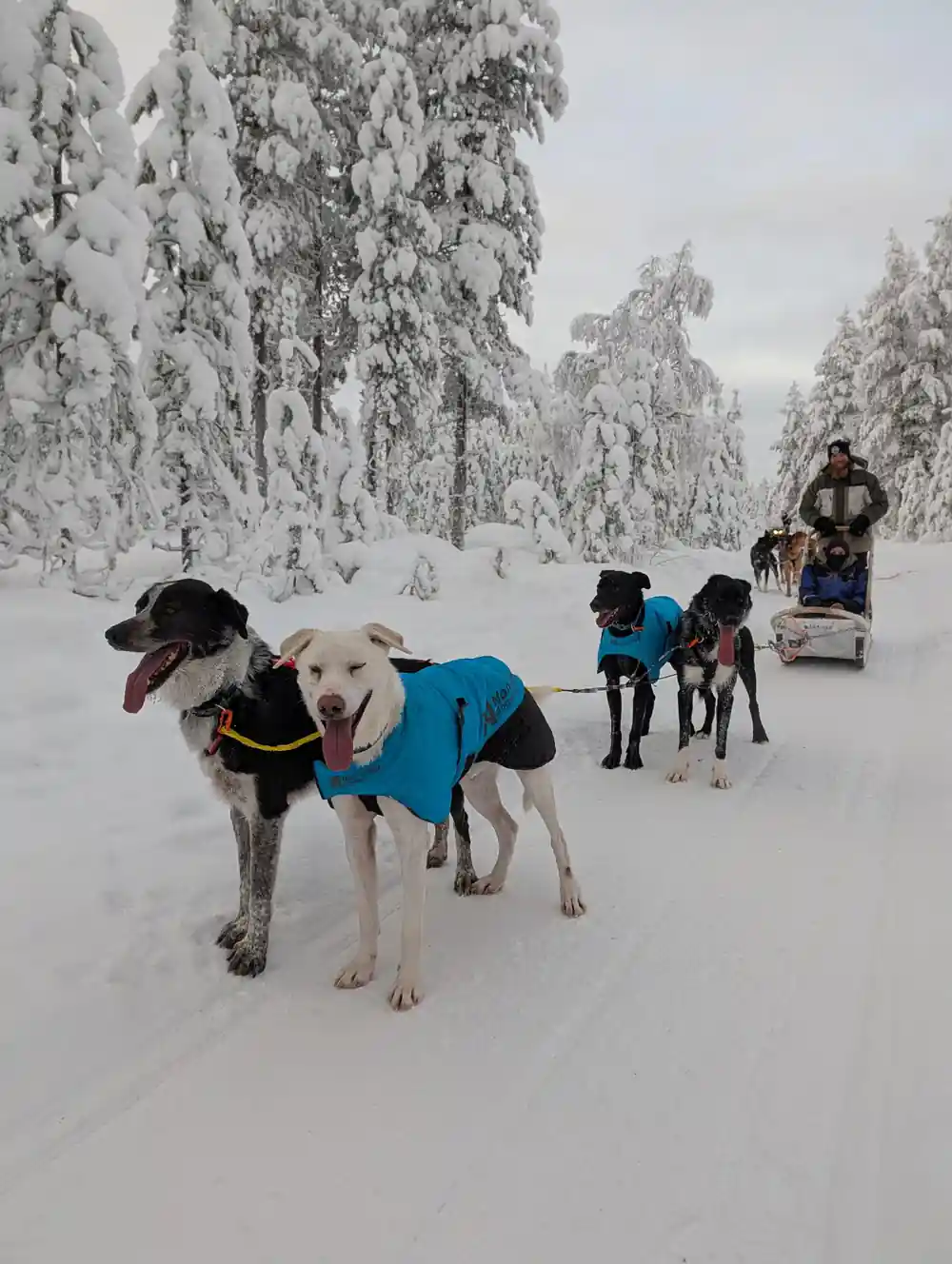
Husky teams communicate through simple, sharp commands that the dogs learn from puppyhood. The most essential command is 'Haw', which means turn left. 'Gee' means turn right. These commands are called out clearly and decisively, not whispered or mumbled. Your team will have heard these words hundreds of times, and they respond quickly when you say them with confidence. 'On by' tells the dogs to ignore distractions and keep moving forward, useful if they're curious about something at the side of the trail. 'Easy' means slow down but keep going, while 'Whoa' means stop completely. Most drivers use 'Whoa' sparingly because stopping a full team requires them to plant their feet and push back hard against the sled.
During your 3 hour 30 minute experience, you'll use these commands constantly. The dogs respond to tone as much as to words, so shouting panicked commands doesn't work as well as calm, clear instruction. Your lead dogs, the pair at the front of the team, are especially important because the rest follow their direction. Talking to your team and using the right commands at the right moment creates a rhythm between you and the dogs, turning the activity from simply being pulled along into genuine teamwork.
Navigating Corners and Downhill Sections
Steering around corners requires you to shift your body weight while calling out the command. When you want to turn left, say 'Haw' and lean your weight onto your left runner. The sled will naturally follow the direction of your lean. On the trail at Apukka, you'll encounter gentle curves and wider turns rather than hairpin bends, giving you space to practice the technique. Your lead dogs will help guide the team if you call the command clearly, and the sled will respond predictably if you've shifted your weight correctly. Sharp, sudden movements unbalance the sled and confuse the dogs, so smooth, deliberate steering works best.
Downhill sections demand respect and focus. As the sled picks up speed going downhill, you'll need to use your brake to control the pace. Pressing down gradually keeps the speed manageable and prevents the dogs from running faster than they can handle safely. The trail's terrain won't feature steep descents, but the principle remains important. You control the sled's speed, not the other way around. If you feel the sled accelerating faster than you intended, press the brake harder. The dogs won't mind; they're trained to work with drivers who communicate clearly through brake and command.
20 km
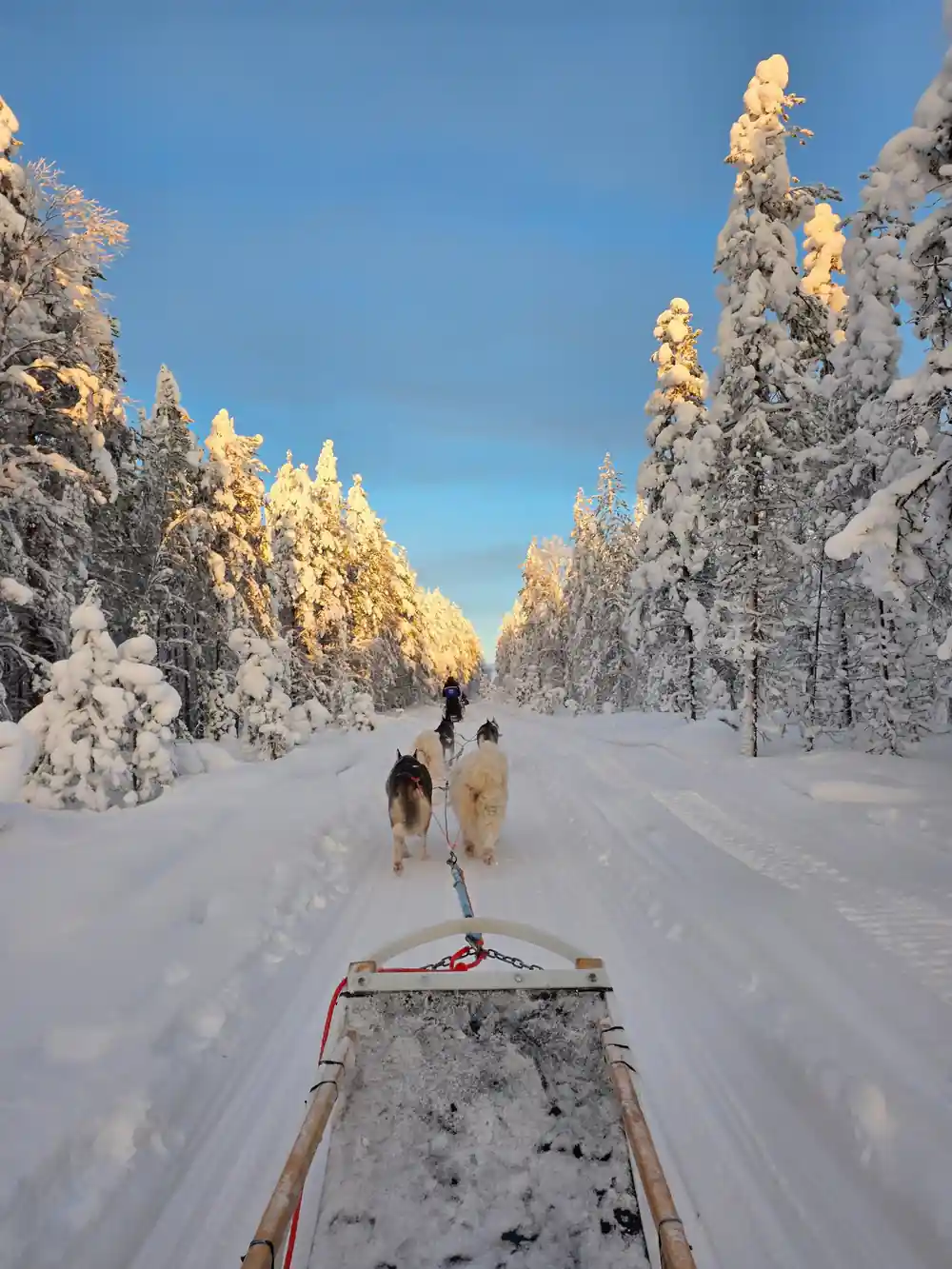
A team of 6 to 8 huskies typically reaches speeds of 15 to 20 kilometers per hour across the snow.
What to Do If the Sled Tips Over
Despite your best efforts, tipping is a possibility that guides prepare you for. A sled tips most often when a driver shifts weight incorrectly during a turn, leans too far to one side, or hits a hidden obstacle. If it happens, your first instinct should be to let go. Holding onto a tipping sled can injure your arms and shoulders. Once you release, fall clear of the sled and runners. The dogs will stop or slow significantly when they feel the sled is no longer tracking properly, and they're trained to respond to 'Whoa' immediately. After you and any passenger have gotten clear, the guides will help you right the sled and continue.
A tip-over isn't a sign of failure; it's a moment that teaches you about balance and weight distribution on snow. Many experienced drivers have tipped a sled at some point. The guides expect it might happen and know how to help you recover quickly. Once the sled is righted, you can continue. This is part of learning to drive your own team, and it's why the pre-departure briefing covers it. Most drivers complete the 6 km trail without tipping, especially once they understand the technique.
Swapping Driver and Passenger Halfway Through
If you're traveling with another person, Apukka can arrange for you to swap roles partway through. One person drives the first half, and the other drives the second half. To make this work smoothly, you'll pull over at a designated point on the trail. The driver steps off and becomes the passenger, while the passenger moves to the back of the sled to take the handles and the position of command. Both of you should be familiar with the commands, brake, and steering techniques from the briefing, because the sled and team don't change their behavior just because a new driver is in control. The transition takes only a few minutes, and then you're moving again with fresh hands on the runners.
This swap is an excellent way to share the full experience of sledging Rovaniemi. Driving demands concentration and physical engagement, but it's also tiring because you're making decisions constantly and adjusting your balance. The passenger role lets you relax, watch the landscape, and enjoy the rhythm of the dogs working. Switching halfway means both of you get to experience both perspectives. Discuss with your partner before the tour starts who will drive first, or ask the Apukka team to decide. Either way, the swap ensures that everyone leaves with the memory of commanding their own team.
Speed and Trail Conditions
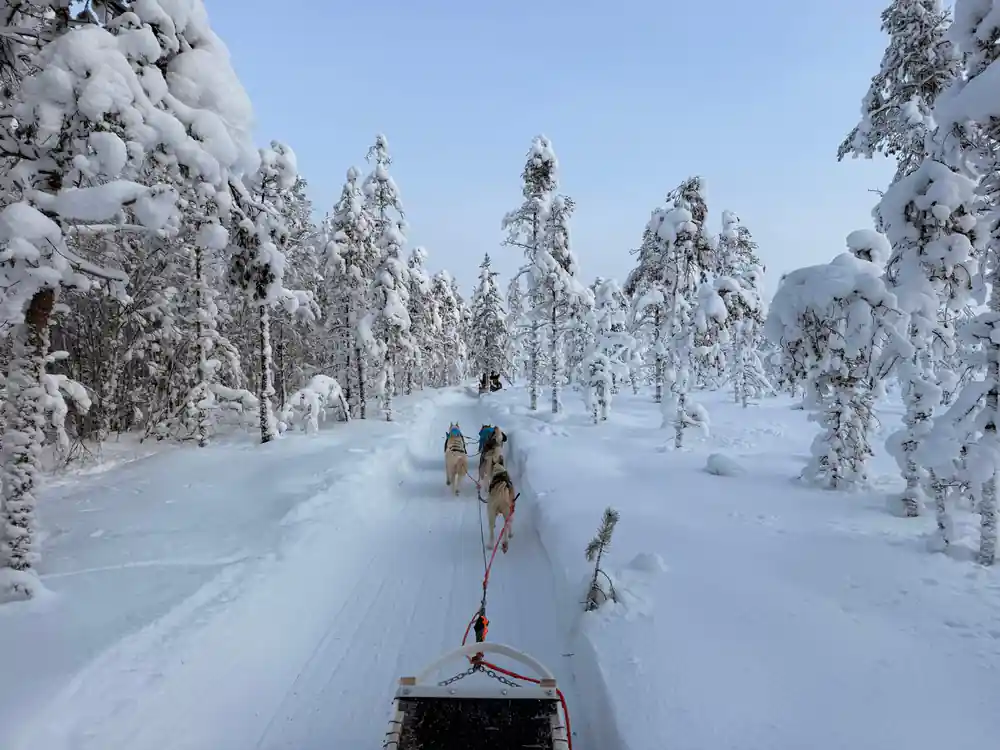
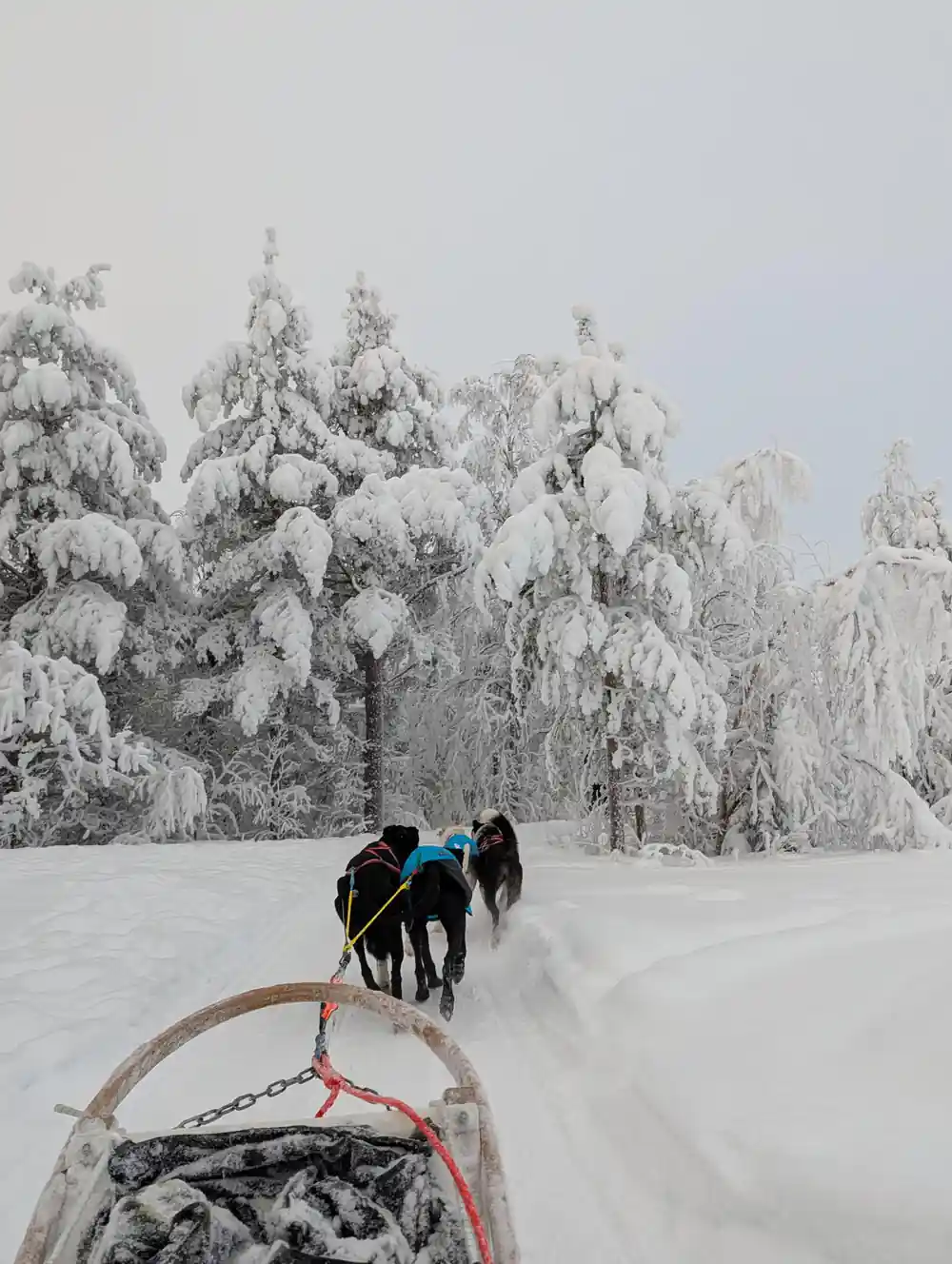
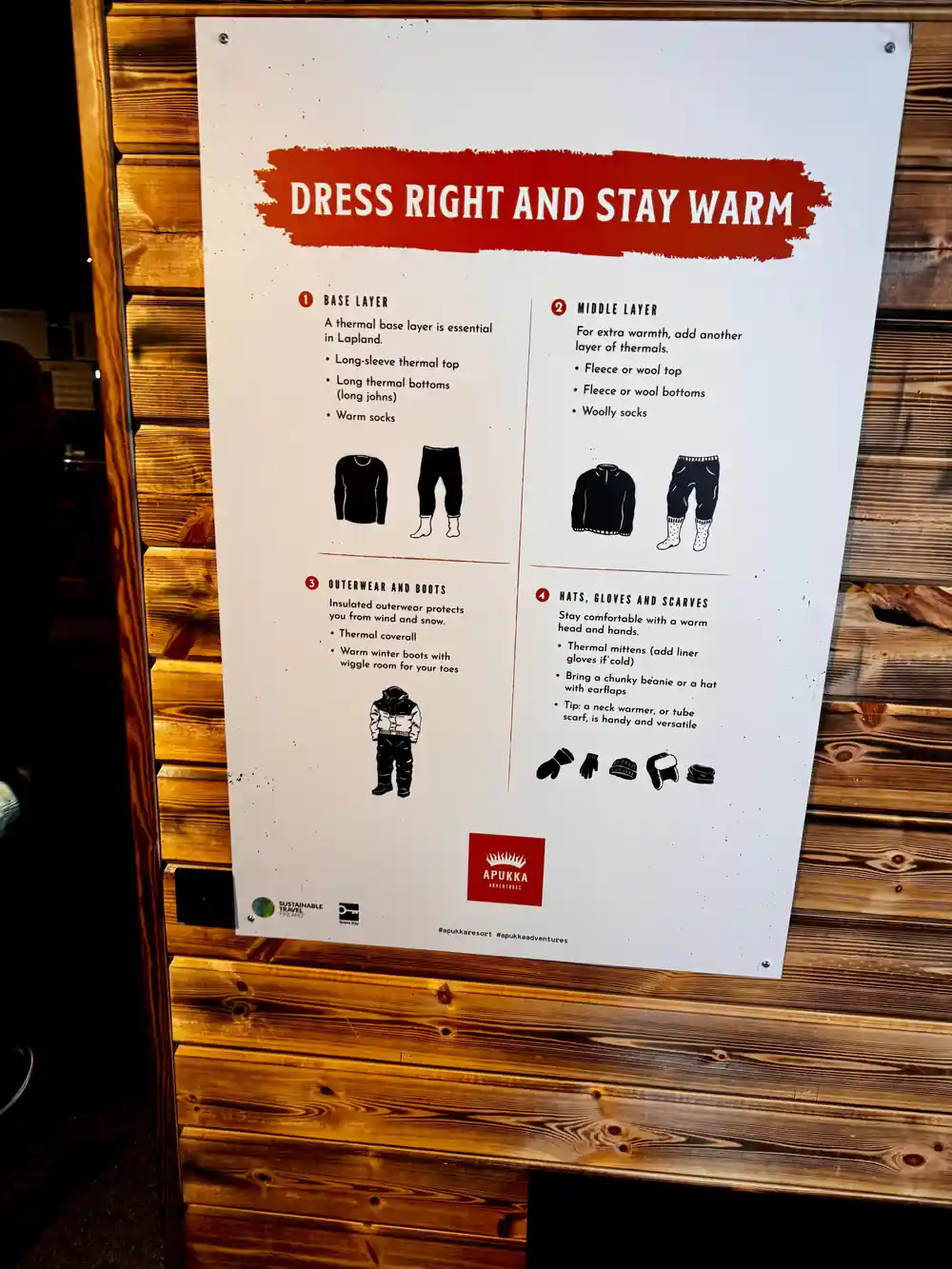
Husky teams don't move at a single fixed pace. Most of the time, your team will travel at a steady trot between 10 and 15 kilometers per hour, which is fast enough to feel the thrill of speed but controlled enough that you're not fighting to maintain balance. On flat, open sections of trail, the dogs may want to accelerate, and your brake becomes your tool for keeping pace manageable. On uphill sections or in deeper snow, the team naturally slows because the work becomes harder. The 6 km distance at Apukka is designed so that both team and driver stay comfortable without exhaustion. You're not racing; you're experiencing what it feels like to control a working sled team through actual winter conditions. The trail at Apukka includes varied terrain, so your speed will change throughout the journey. Flat sections are your chance to feel the dogs' power and the sled's responsiveness. Slightly hilly sections teach you how to manage the brake and shift your weight to stay balanced as the ground changes beneath you. Winter clothing provided by Apukka, including thermal overalls and boots, keeps you warm while you're active and standing on the runners. By the end of 3 hours 30 minutes, you'll have experienced the genuine range of what sledging means in Rovaniemi's winter landscape.
Ready to take the reins? Book your adventure
from US$253Reserve now & pay later
Preparation
Gear up and meet your team
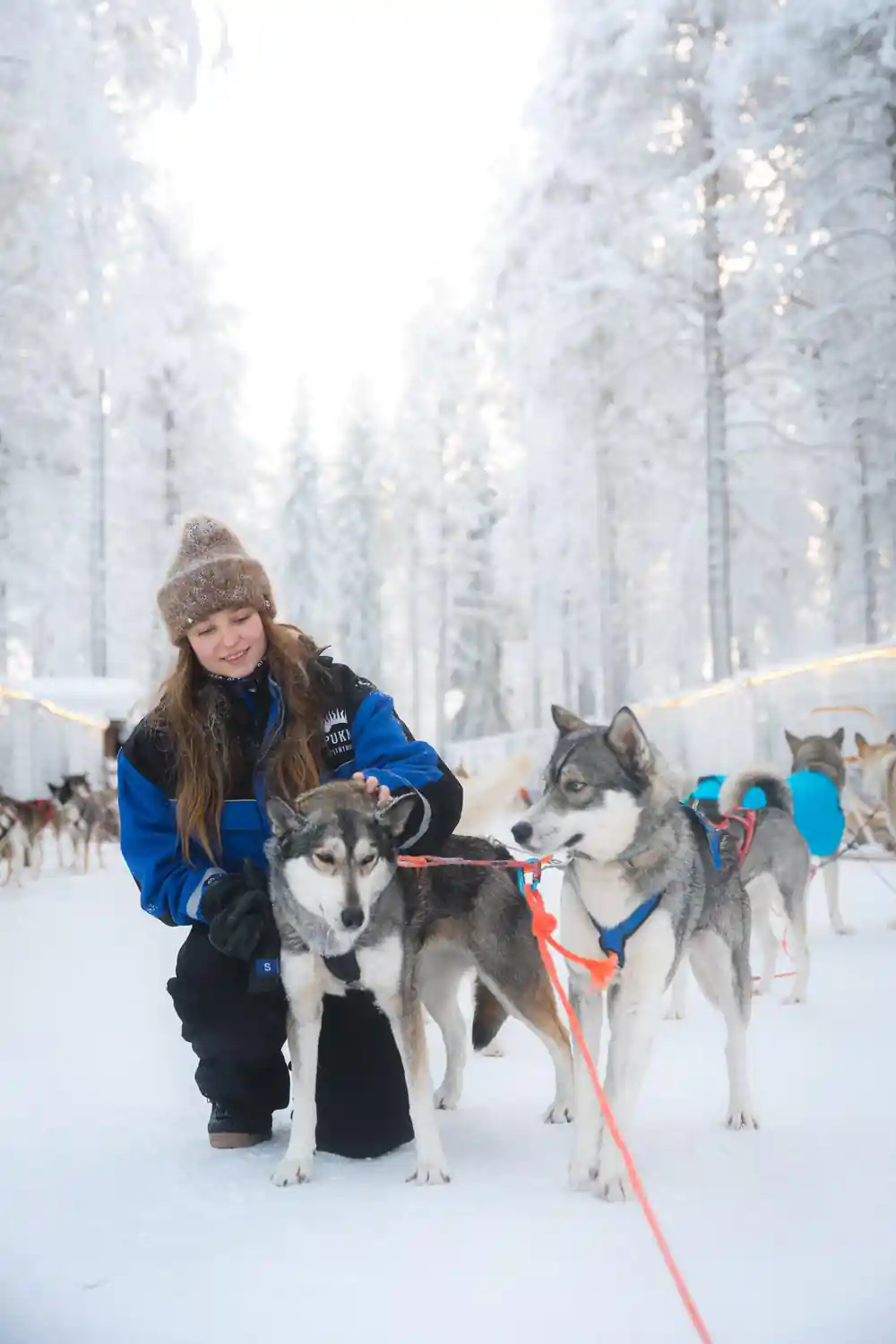
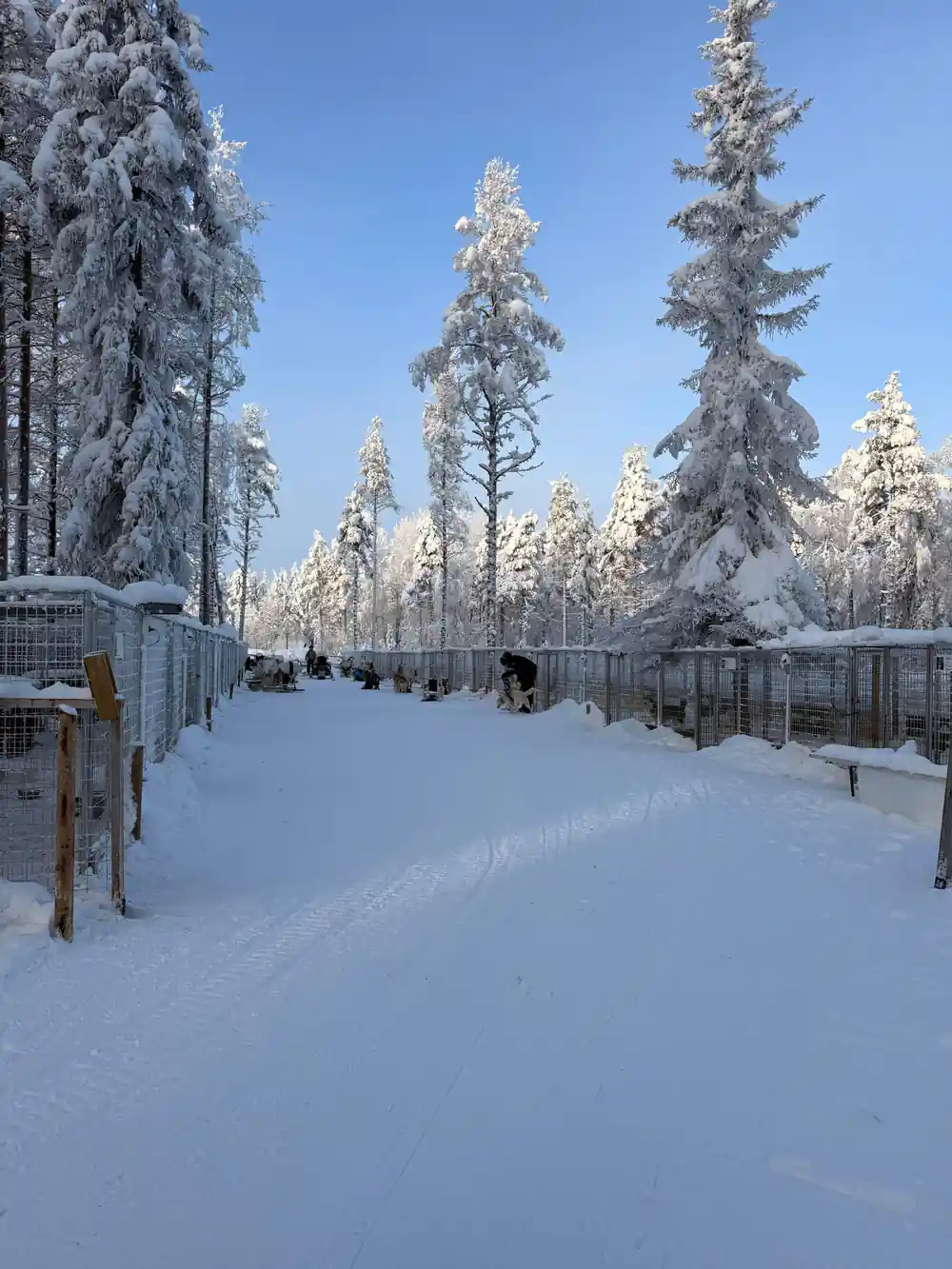
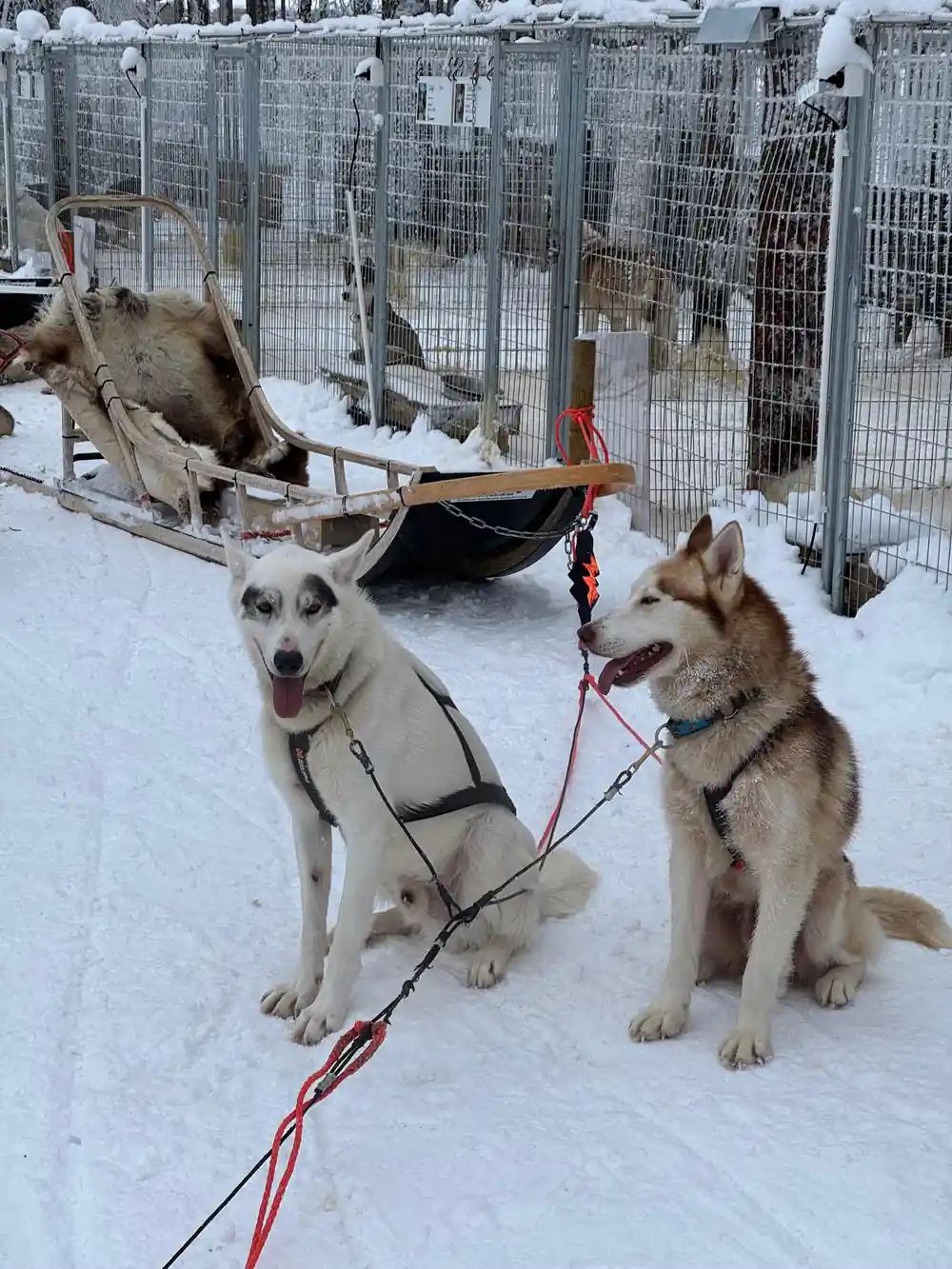
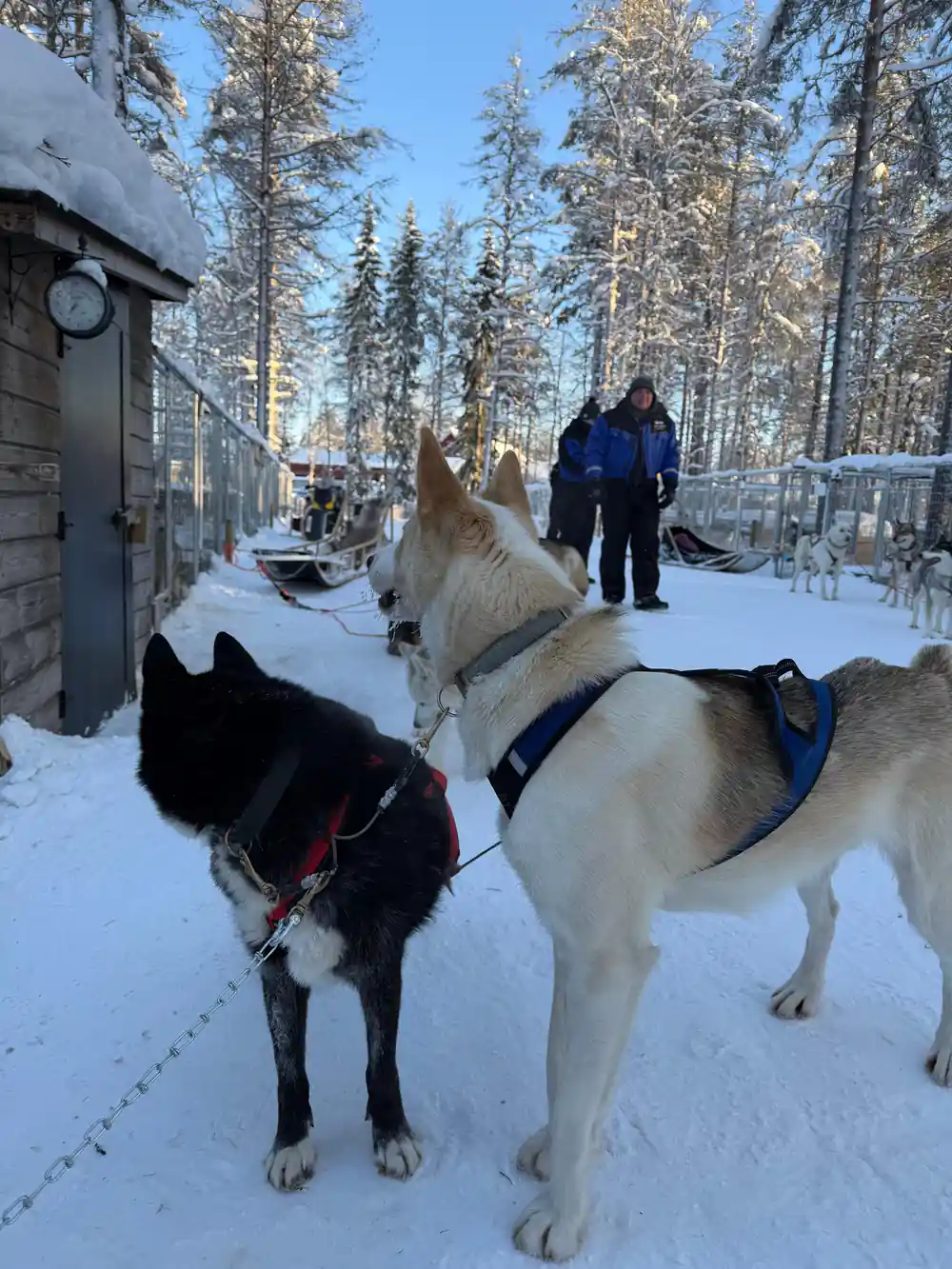
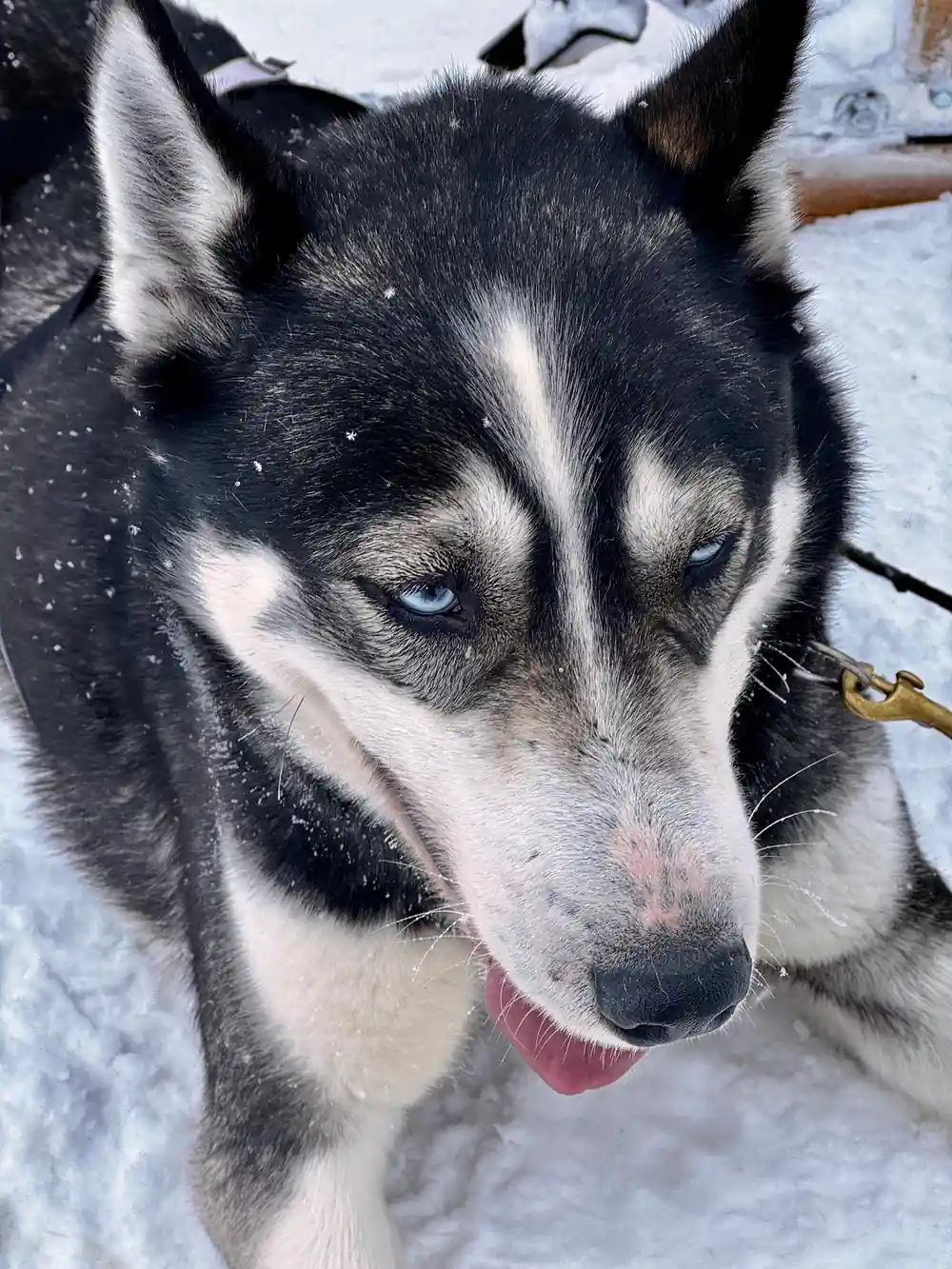
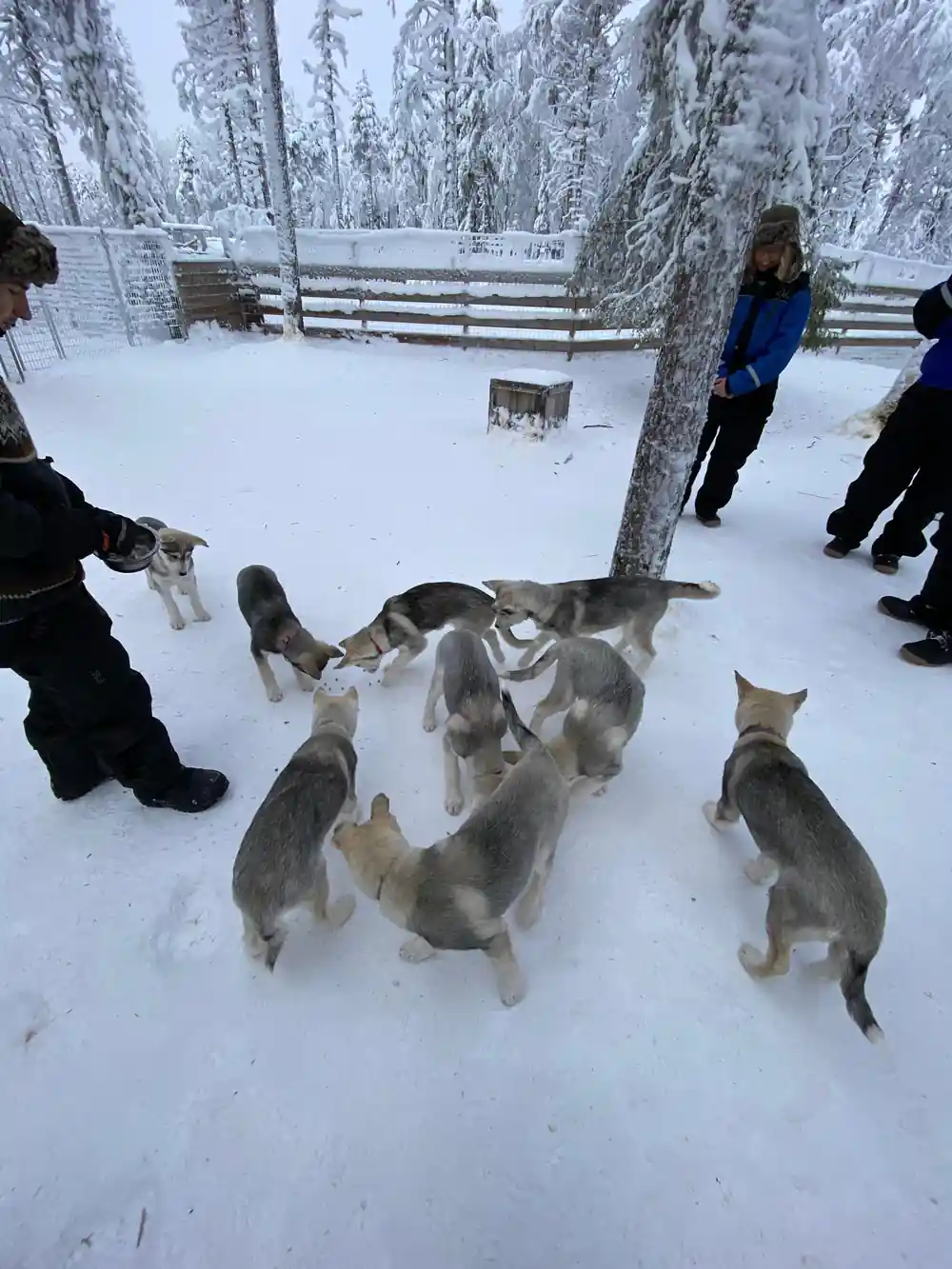
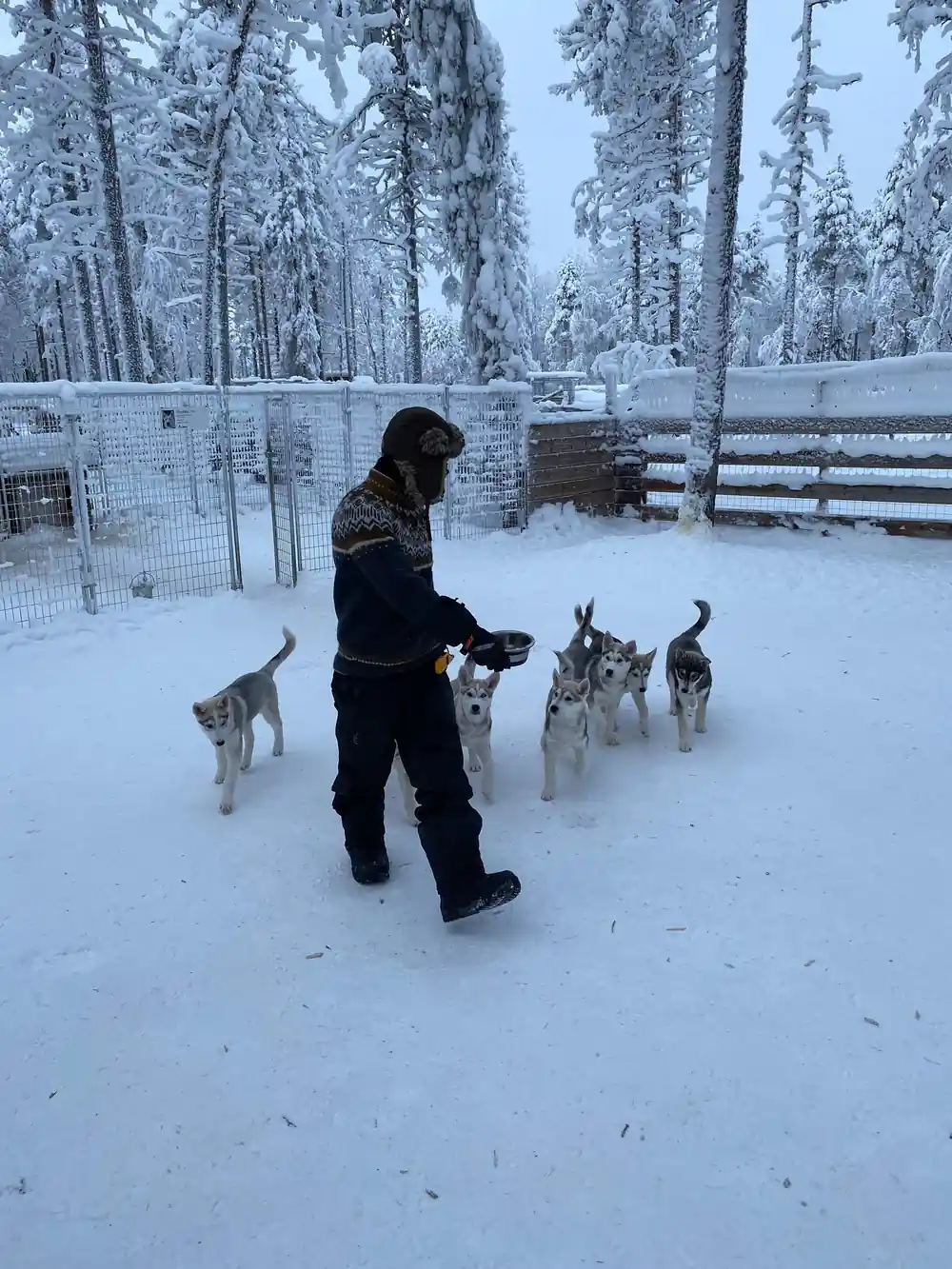
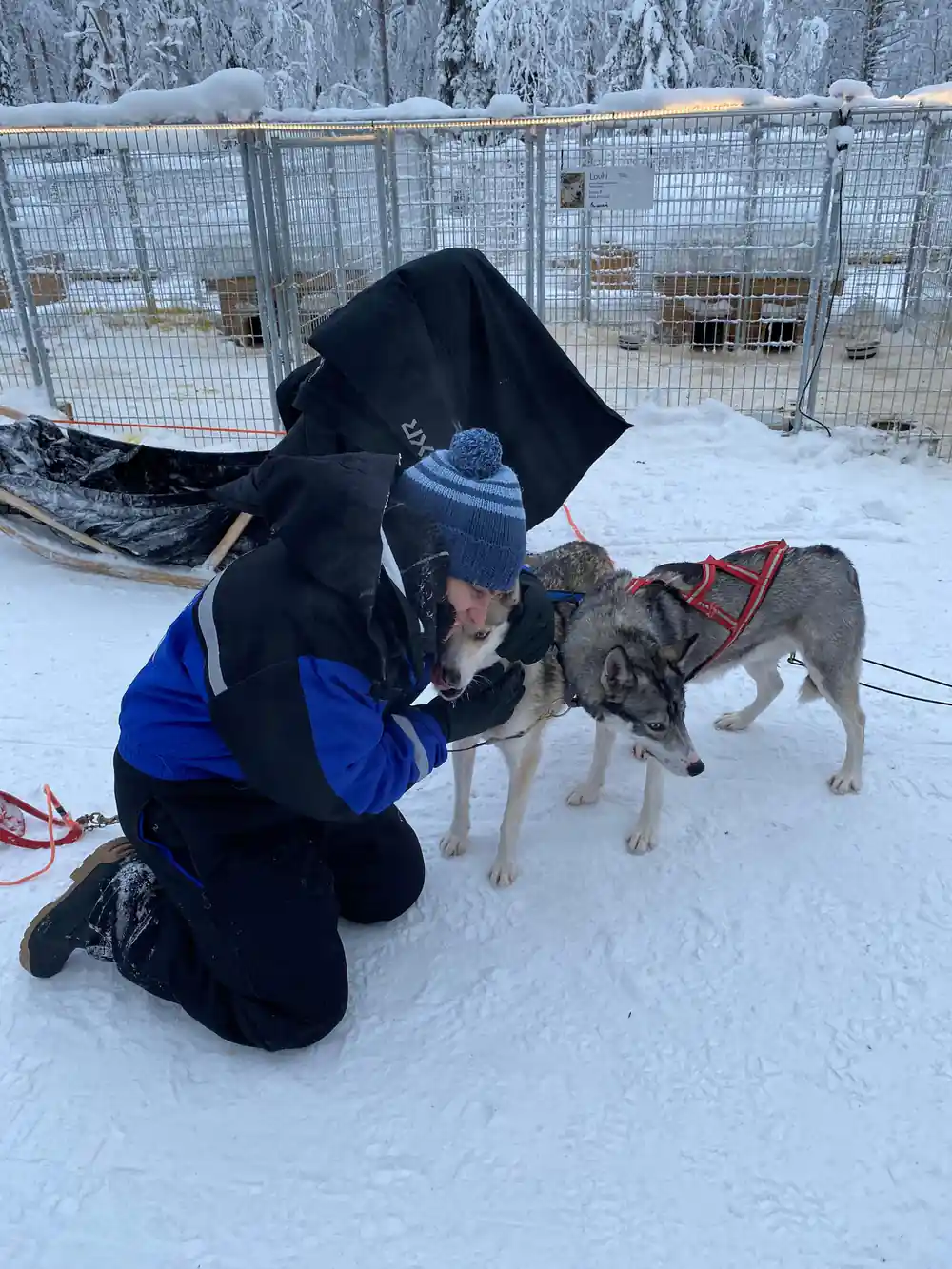
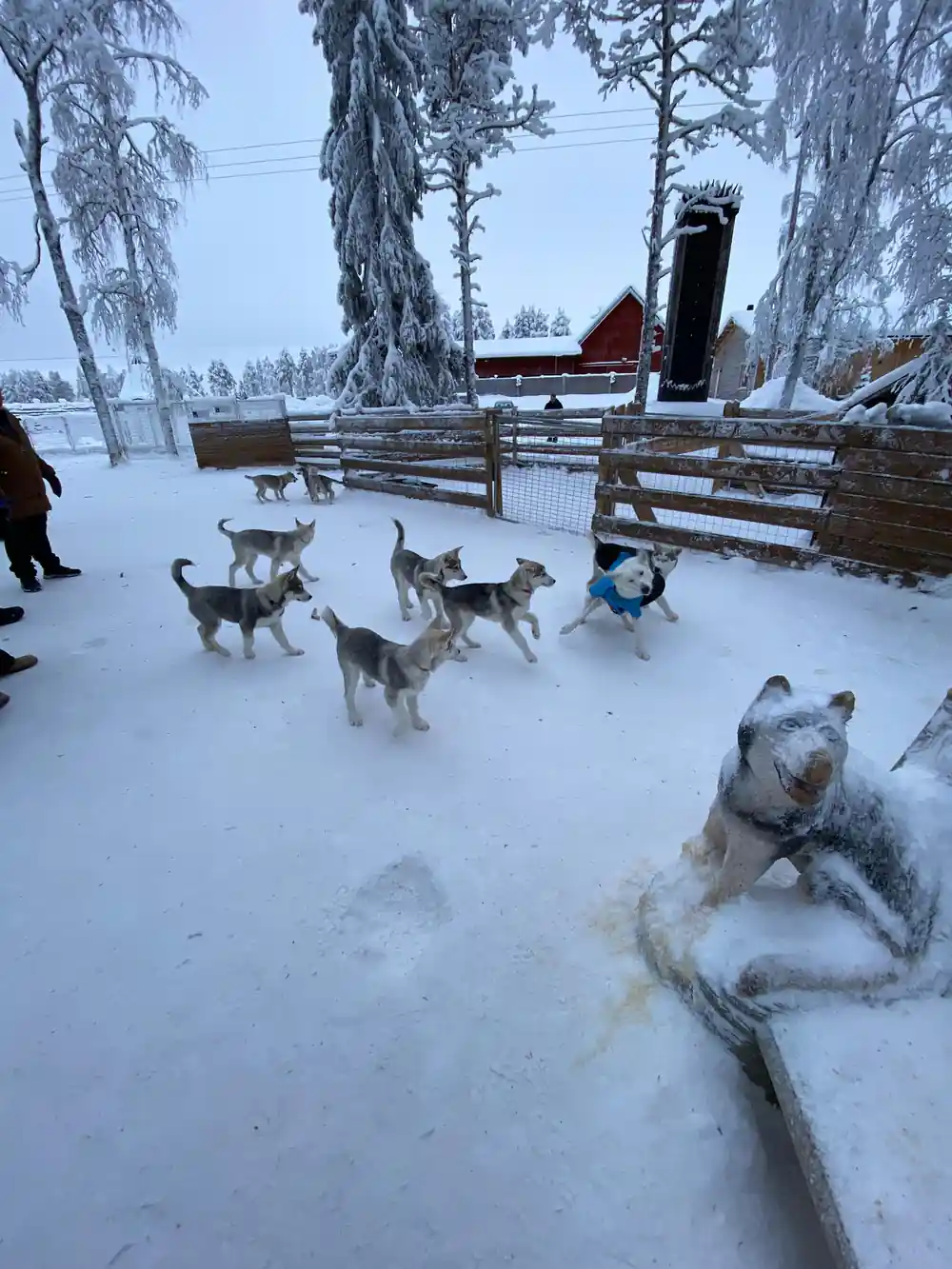
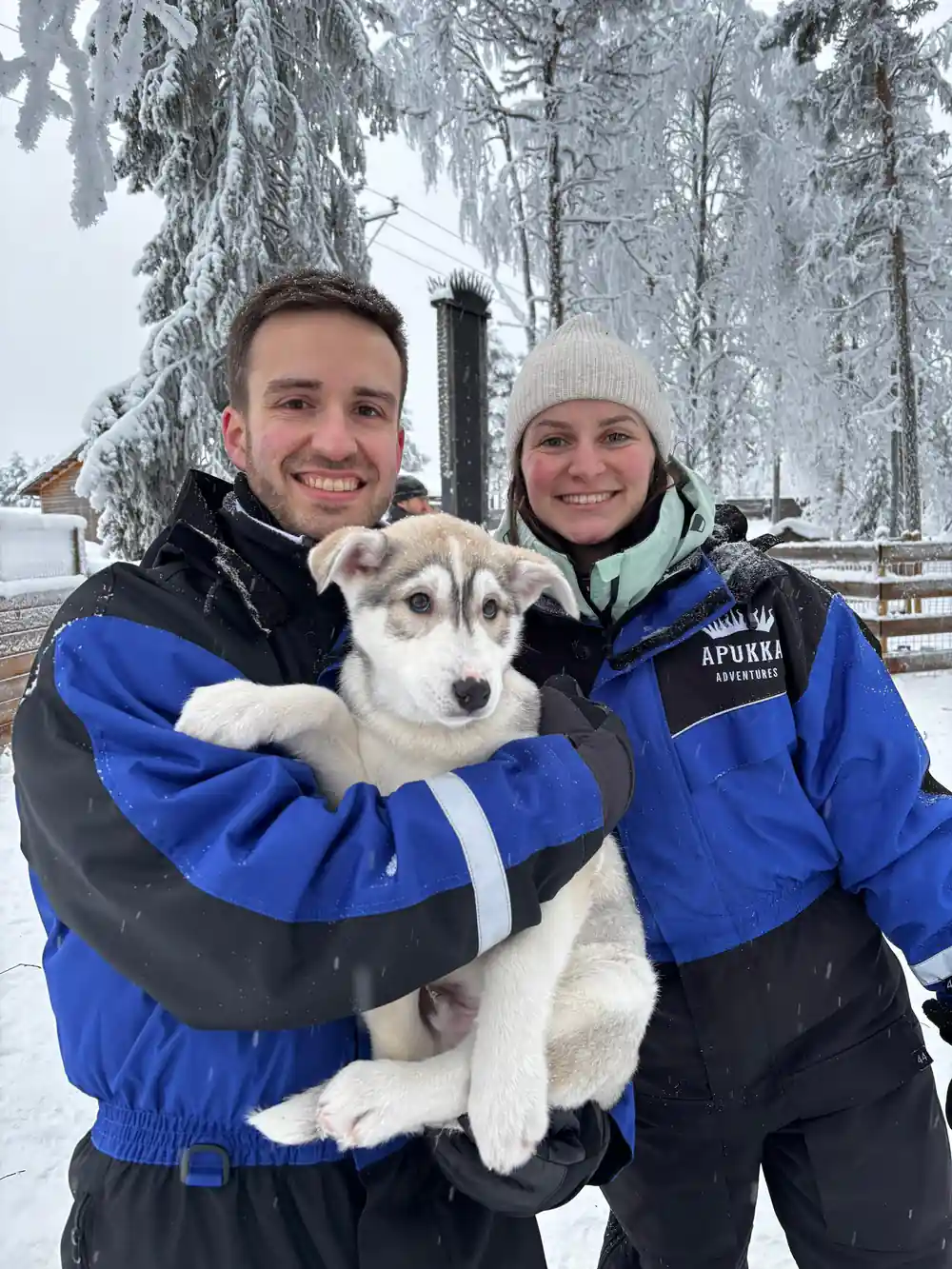
Arrive at Apukka Resort and receive thermal clothing fitted to your size. Meet your husky team and learn their names and temperaments before harnessing begins.
Learn commands and brake use
Your musher instructor covers voice commands the dogs recognize, how to operate the brake with your foot, and how the snow anchor secures the sled when stopped.
Take the runners and lead out
Step onto the sled runners, grip the handlebar, and call your team forward. Feel the acceleration as six powerful huskies pull you toward the winter trail ahead.
Navigate 6 km through forest
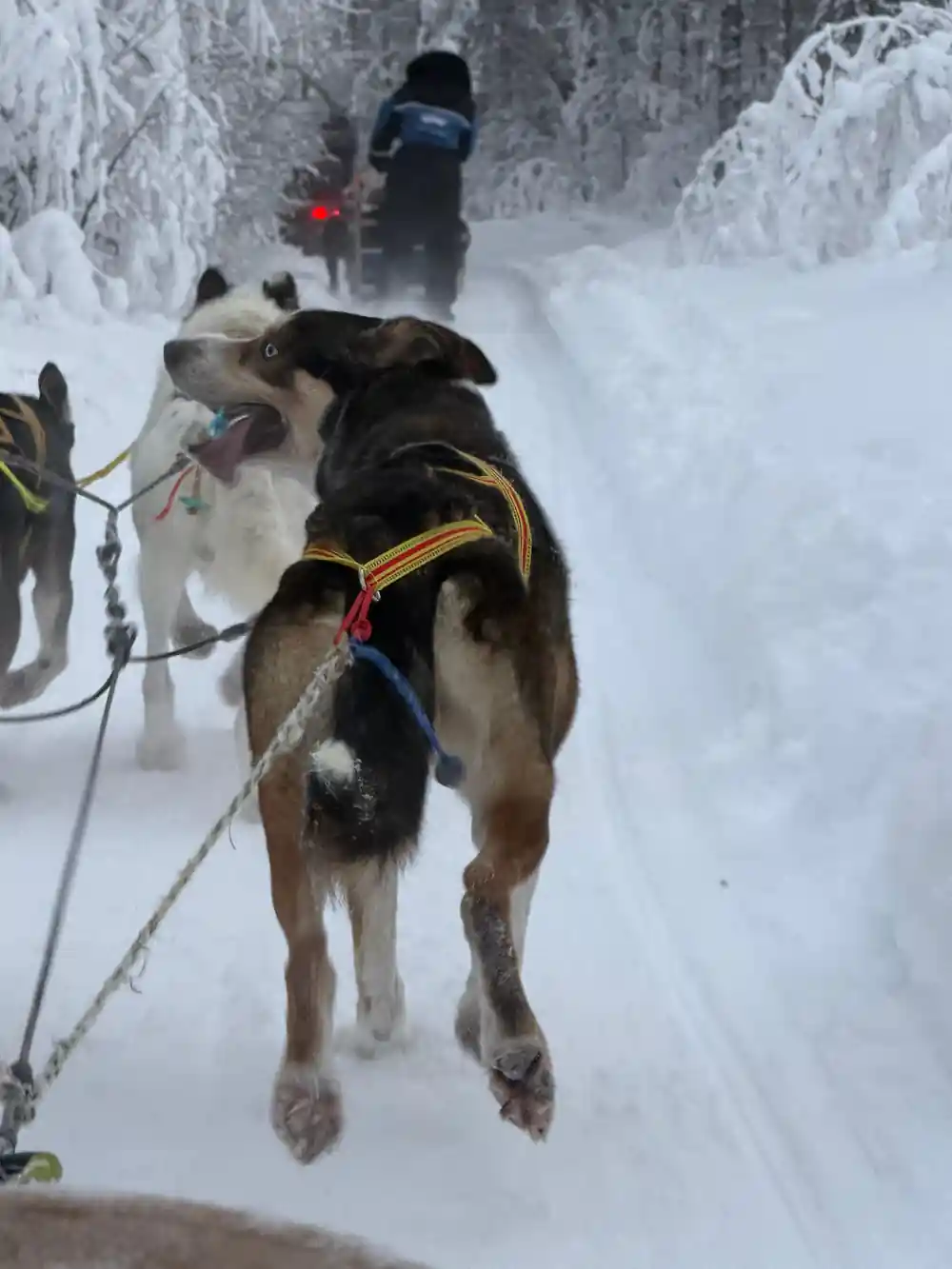
Drive through snow-covered terrain, practicing steering around bends and managing pace. Your team responds to directional commands as the landscape unfolds around you.
Exchange driver and passenger roles
At the midpoint, you and your passenger trade places. Use the snow anchor to hold the team steady while you both change positions on the runners.
Bring the team home, enjoy warmth
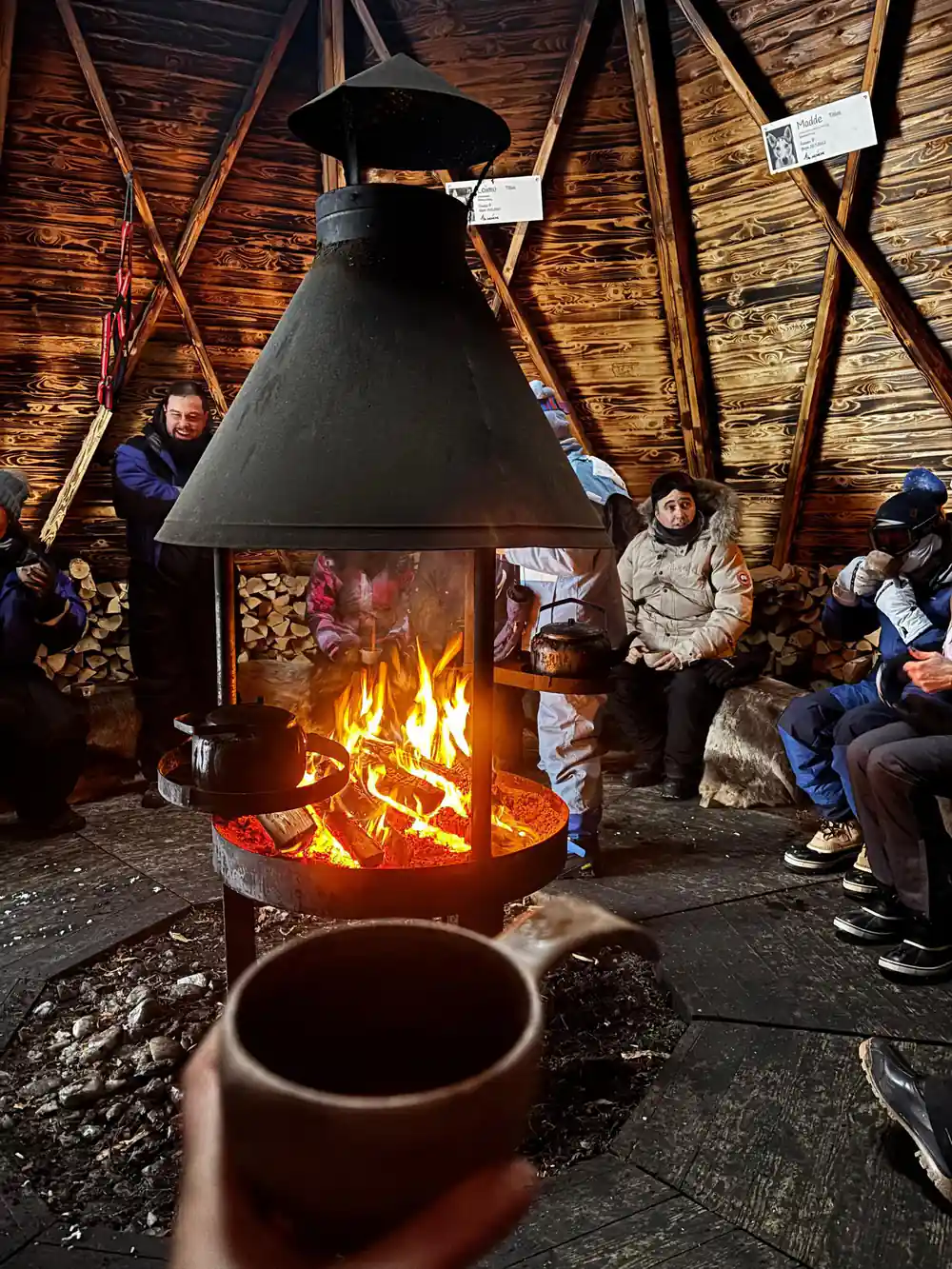
Complete the final stretch back to Apukka Resort. Settle the huskies, then warm up with a hot drink and reflect on your wilderness adventure.
Worth knowing
Can beginners really drive the sled?
How fast do the husky teams go?
Is the 6 km trail flat or hilly?
What do I do with the brake and anchor?
What commands do the dogs respond to?
Do guides ride alongside during the adventure?
What happens if the sled tips over?
Can two people swap driving halfway?
How do I steer around corners and hills?
What safety briefing happens before we leave?
-
★★★★★
The instructors made everything crystal clear. I felt ready before the runners even touched snow.
 Henry D.
-
★★★★★
First time mushing and I was nervous, but the safety briefing left no doubt about what to do.
 Eleanor T.
-
★★★★★
They explained the brake and anchor so well I was confident handling the sled from the start.
 Malcolm Q.
-
★★★★★
The commands made sense after their walkthrough. The huskies and I understood each other.
 Jack H.
-
★★★★★
No experience needed. Their guidance before we set off meant I could focus on enjoying the ride.
 Tracey V.
-
★★★★★
I was anxious about control, but after their demo I felt secure handling the team alone.
 Stefan C.
-
★★★★★
The safety talk covered everything. I knew exactly what my hands and feet needed to do.
 Antje I.
-
★★★★★
Clear instructions and friendly staff gave me the confidence to drive my own team.
 Marta S.
-
★★★★★
They showed us how to manage corners and the anchor system. Every detail was explained.
 Rosa M.
-
★★★★★
Even as a first-timer, their prep work made me feel like a real musher out there.
 Javier K.