The quick version
- Apukka's sled dogs are bred for speed and endurance, selected to thrive in Arctic conditions and love pulling sleds.
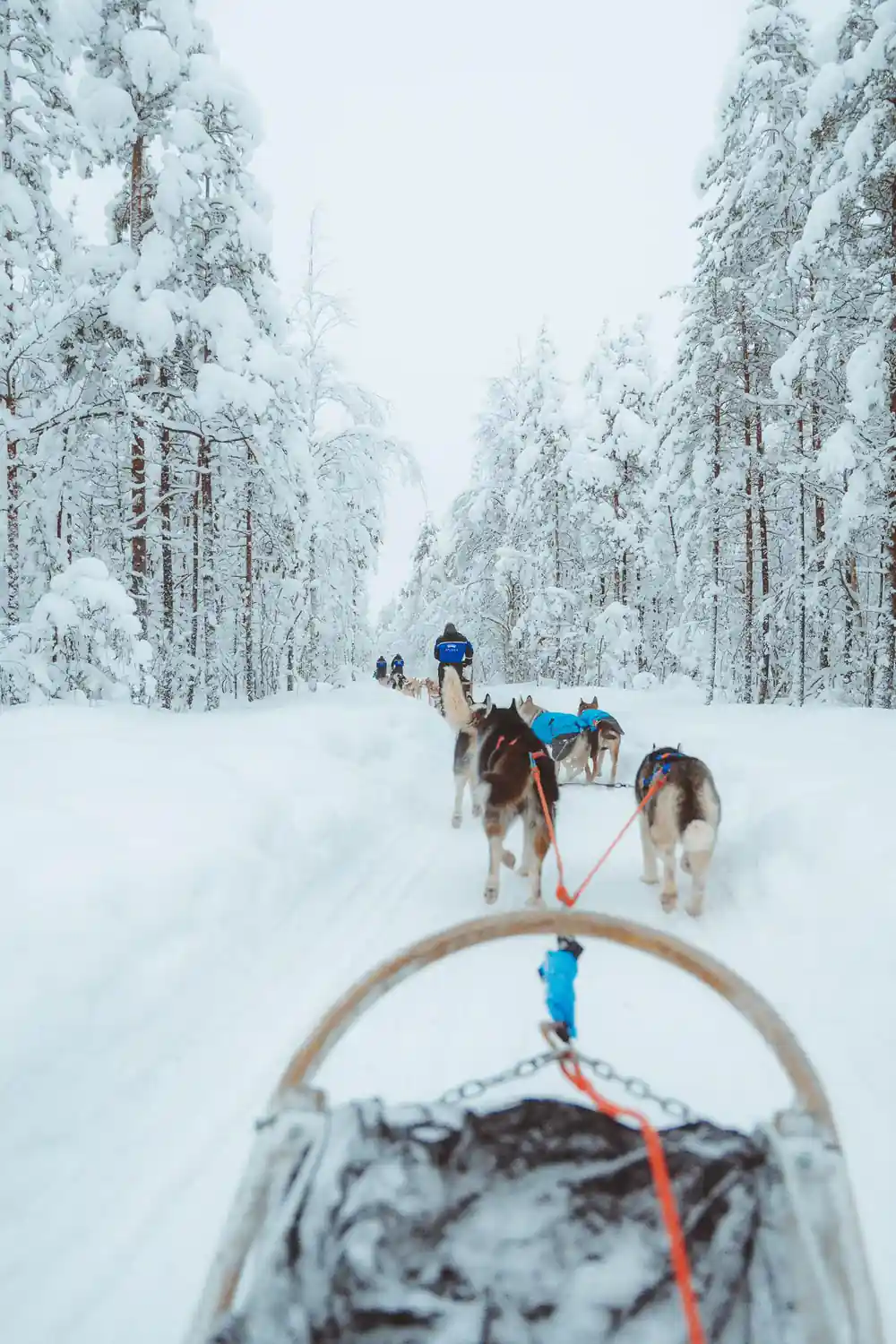
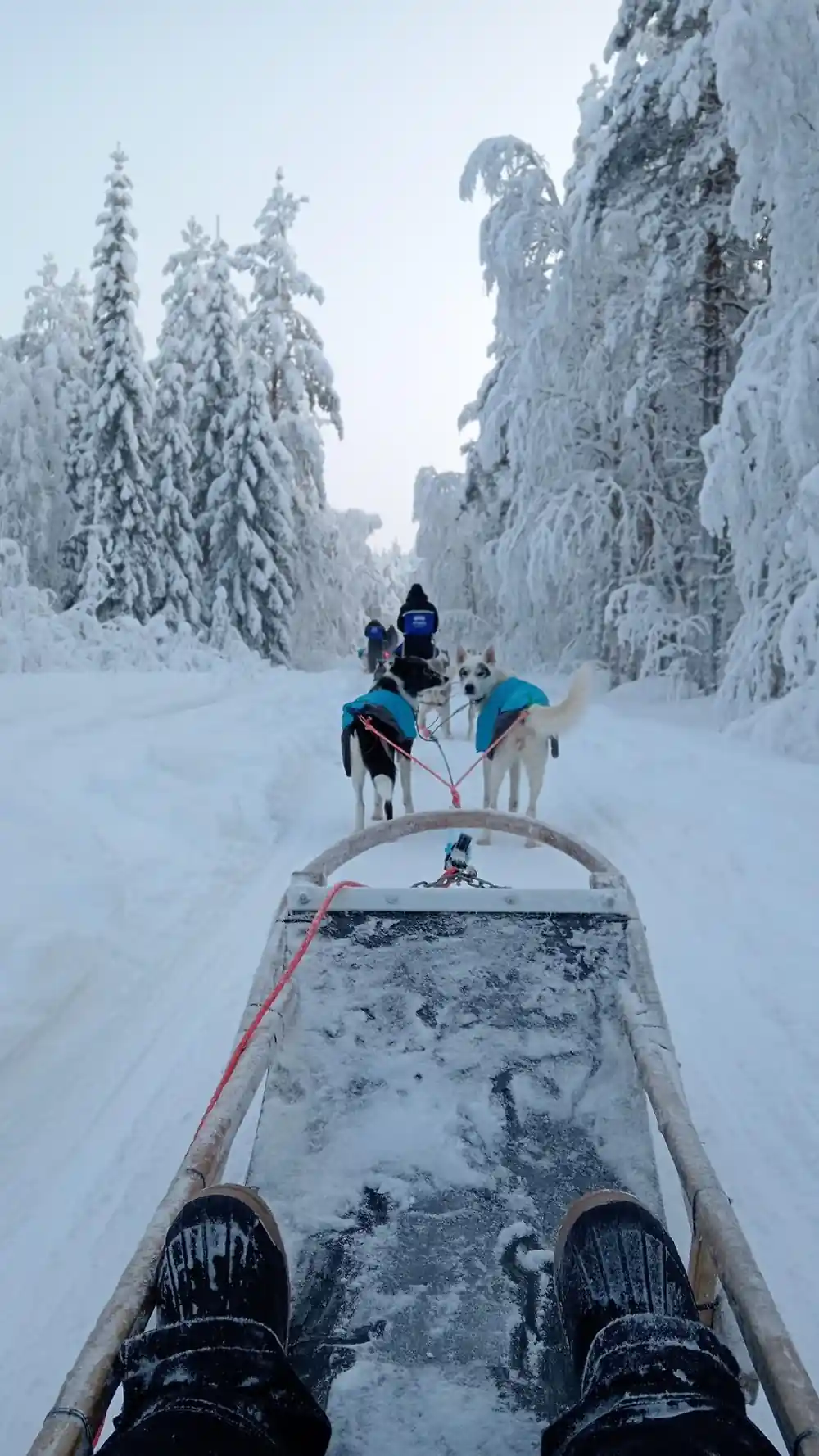
- Each sled is pulled by multiple huskies working in specific positions, coordinated to move you smoothly across the snow.
- Huskies are born to run. That howling and howling at the start line? Pure excitement and eagerness to hit the trail.
- Petting time with the dogs is part of your visit, letting you connect with these athletes before and after your ride.
- The kennel is carefully maintained year-round to keep the dogs healthy, comfortable, and ready for their next adventure.
The Siberian Husky: Built for Distance
Apukka's sled dogs are Siberian Huskies, a breed developed over centuries in northeastern Asia for one specific purpose: covering vast distances in extreme cold. Unlike show dogs bred for appearance, these huskies are selected for endurance, muscle structure, and temperament. A working husky at Apukka weighs between 20 and 27 kilograms and stands about 56 centimetres tall, compact enough to move efficiently through deep snow yet powerful enough to pull a loaded sled mile after mile. Their bodies are built like distance runners rather than sprinters, with long legs relative to their frame and a lean, efficient gait that conserves energy over hours of running.
The breed's temperament is equally important as its physiology. Apukka's huskies are bred to work cooperatively as teams, responding to commands and maintaining focus despite distractions. They are naturally social animals that thrive on interaction with other dogs and with humans. This breeding for both physical capability and psychological suitability means that the dogs you meet during your 6-kilometre ride represent generations of selection for the work they do, not the appearance they happen to have.
Team Positions: Lead, Swing, and Wheel
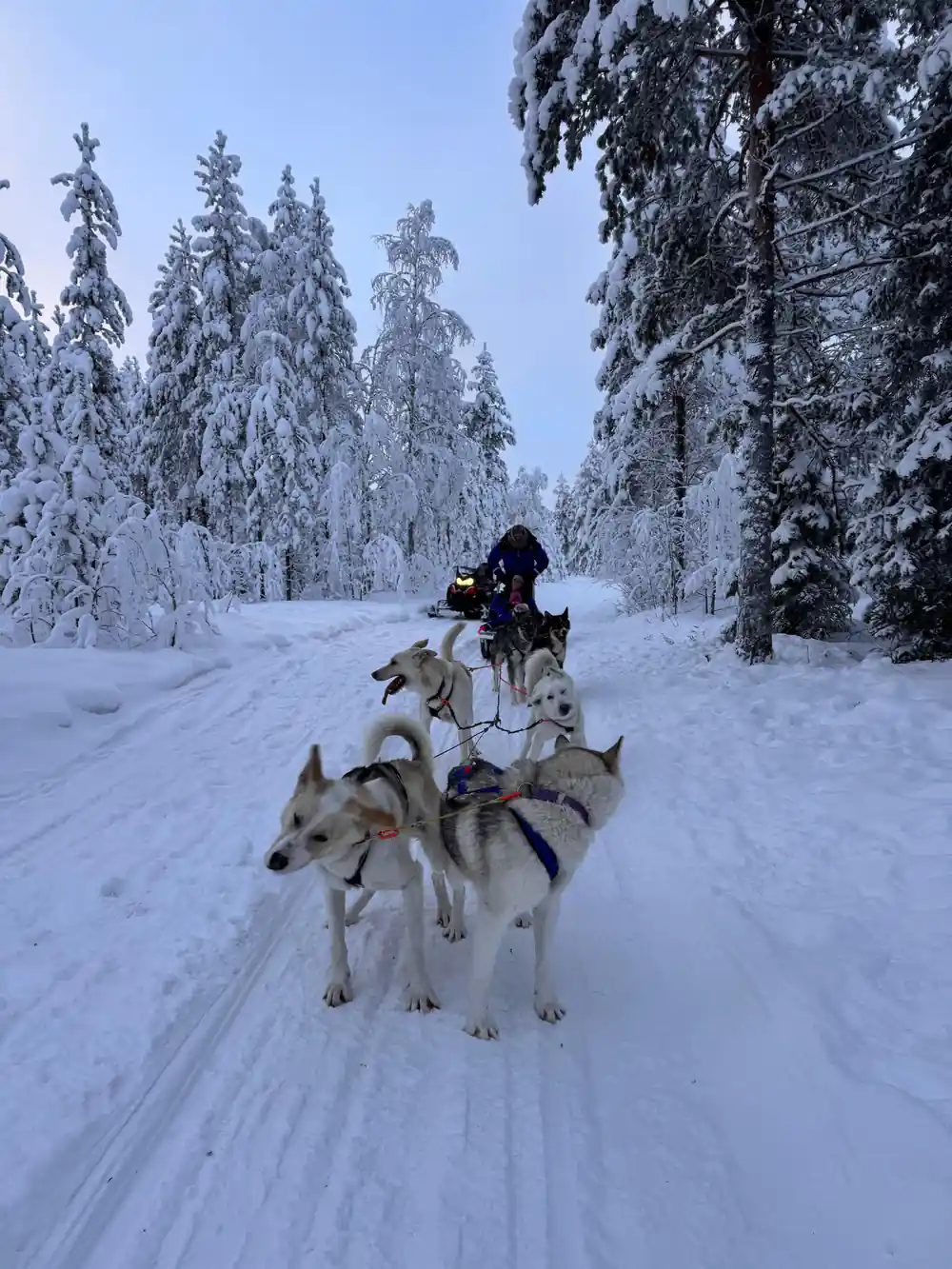
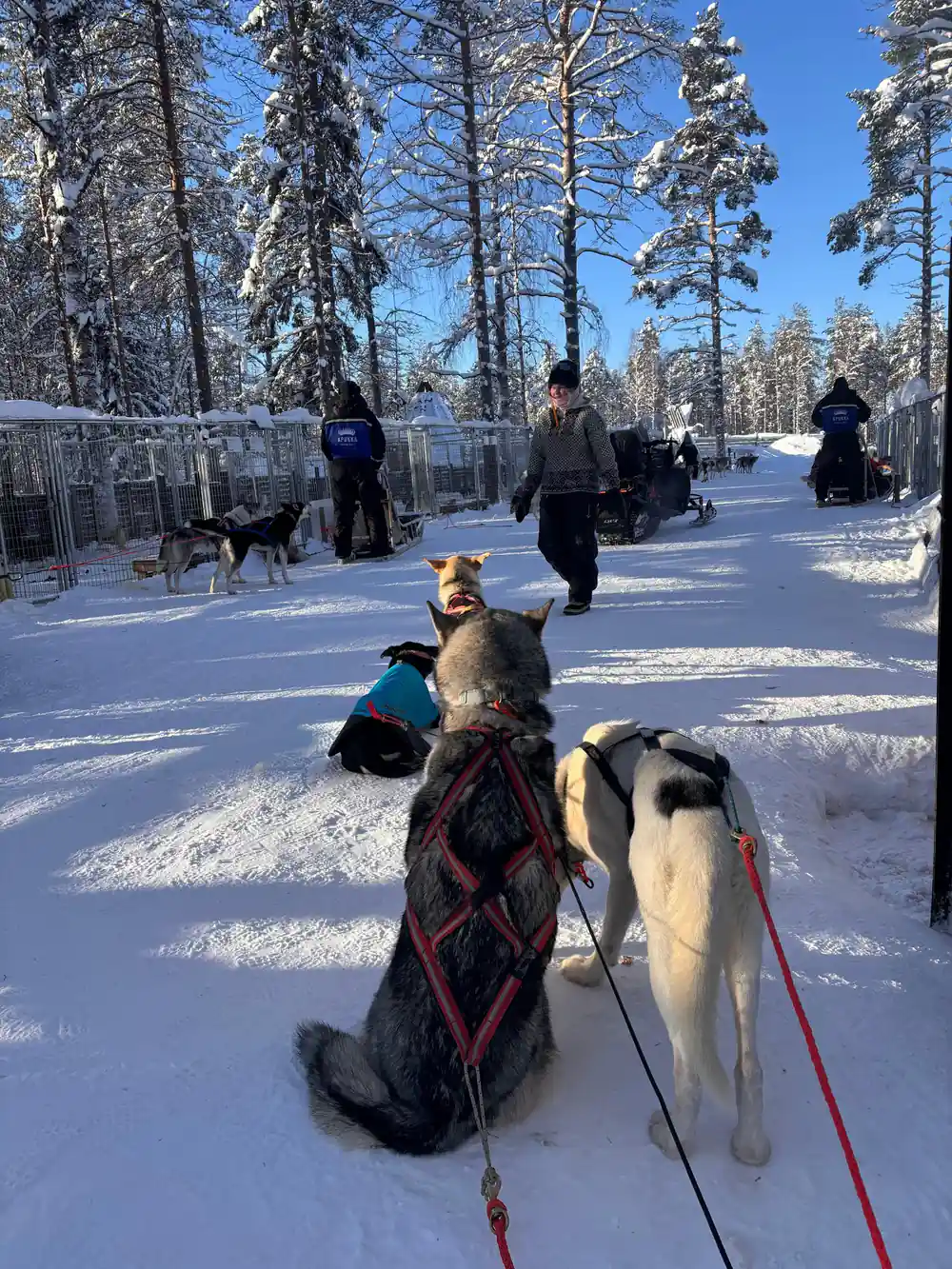
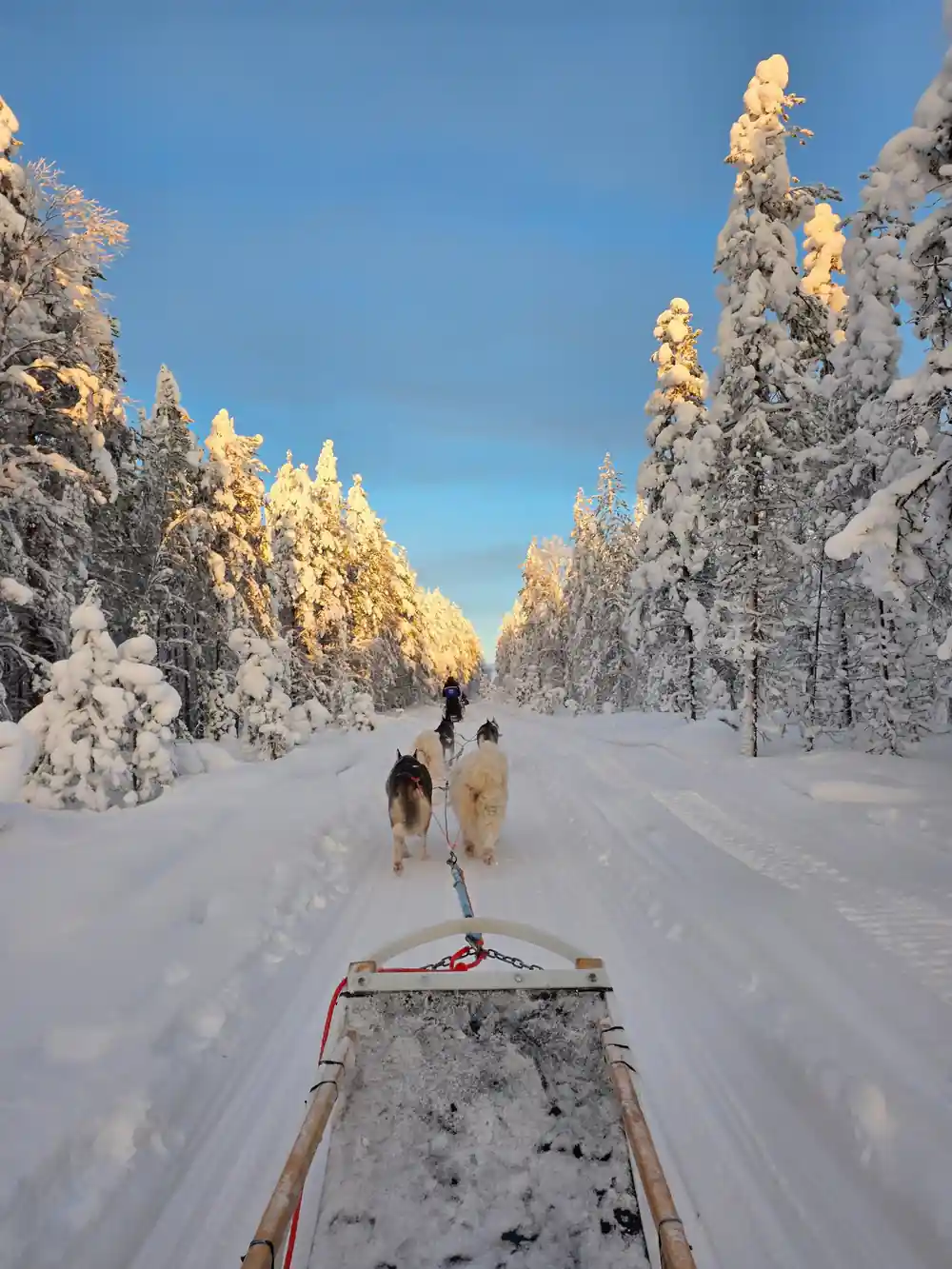
A single sled is typically pulled by four, six, or eight huskies arranged in three distinct positions, each requiring different skills and temperament. The lead dogs run at the front and steer the sled by responding to voice commands like 'gee' for right and 'haw' for left. Leading requires intelligence, confidence, and the ability to focus on the musher's commands while navigating the terrain ahead. Swing dogs run behind the leads and help turn the team, requiring good communication skills and the ability to follow the lead dogs' direction smoothly. Wheel dogs, positioned closest to the sled, bear the weight of starting the sled from a stop and maintaining momentum through turns. These are typically the strongest and most powerful dogs on the team, selected for their ability to handle increased physical demand.
At Apukka, dogs are rotated between positions based on their aptitude and experience. A young husky might start as a swing or wheel dog, learning the basics of running in harness and responding to commands. As they mature and prove their ability, some may advance to lead position if they show the required focus and decisiveness. Others excel in wheel position where their strength is most valuable. This system ensures each dog works where it contributes most to the team's performance and where it is most likely to enjoy the work.
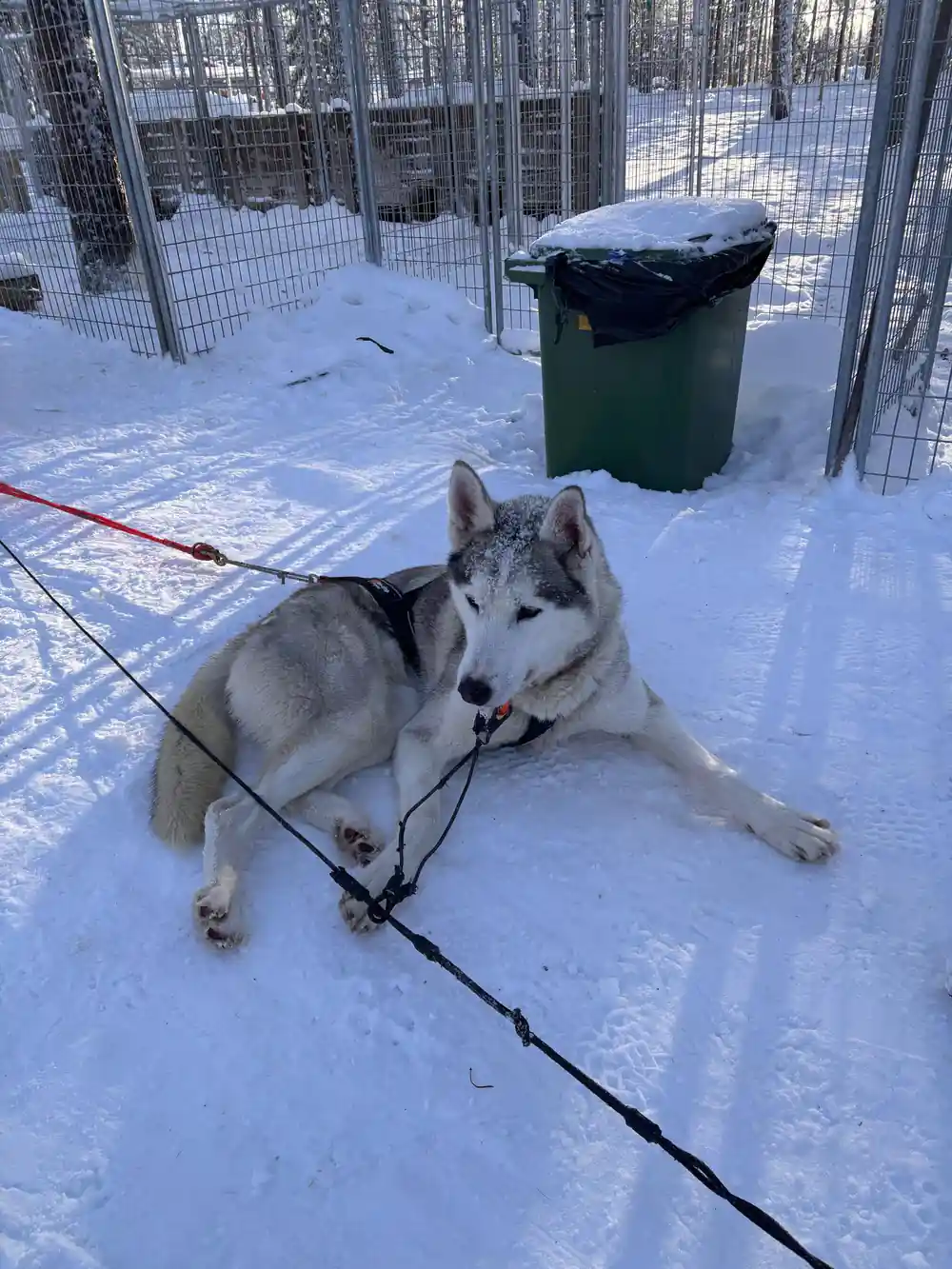
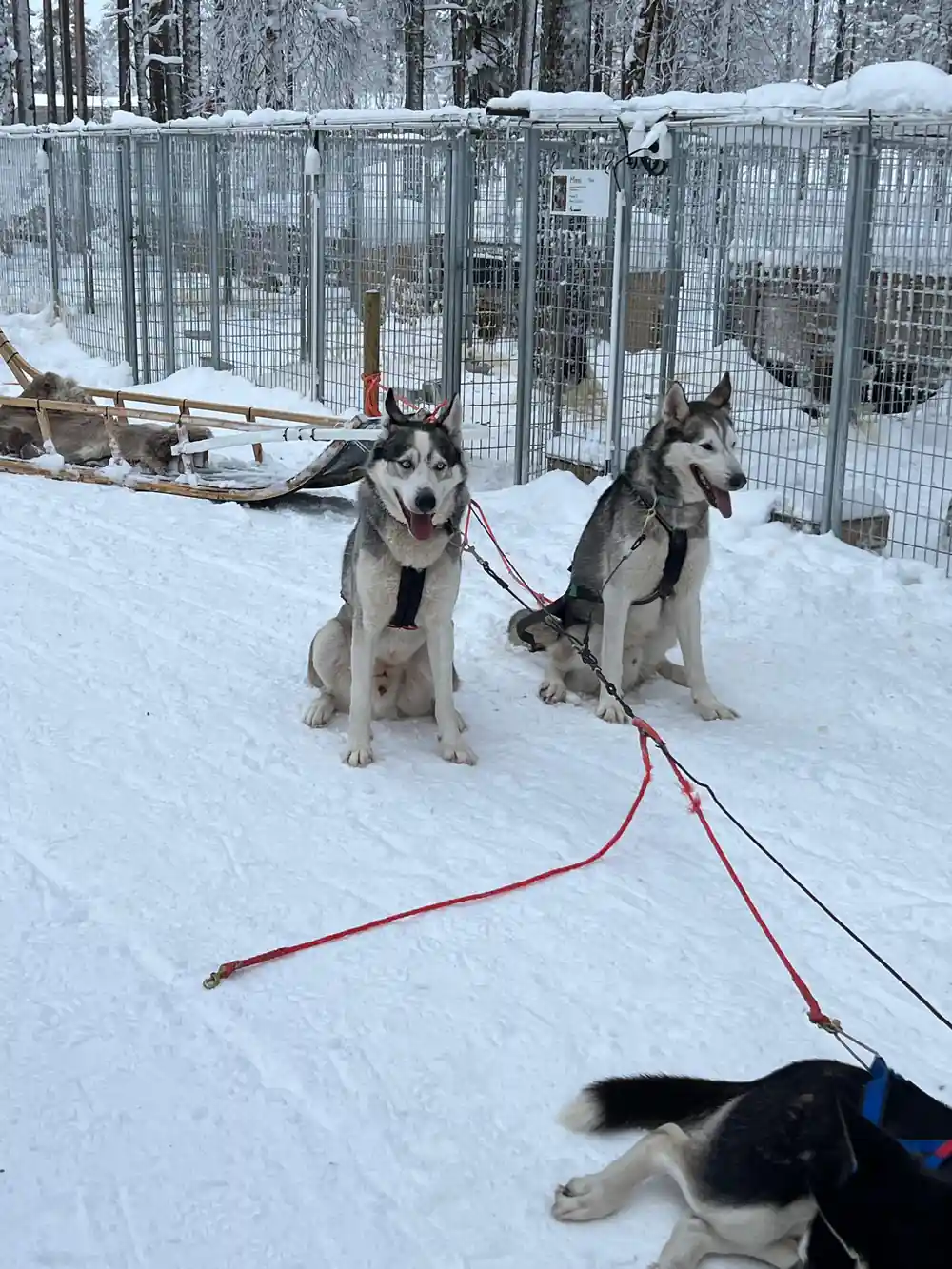
Husky in harness, voice raised in pre-run excitement
Why Huskies Scream Before They Run
If you arrive early at Apukka, you will hear an intense, almost otherworldly sound emanating from the kennels: a chorus of howls and high-pitched barks that builds as the dogs anticipate their upcoming run. This is not distress or aggression, but excitement and purpose. Sled dogs are bred not just to run, but to want to run with an intensity that is almost obsessive. For a husky in good health and proper training, running is not an obligation but a fundamental drive, something they actively desire. The vocalisations intensify as harnesses are brought out and the sledding area is prepared, because the dogs understand these signals mean they are about to do what they were born to do.
This enthusiasm is essential to understanding the working sled dog. Unlike a horse that might be coaxed into pulling weight, huskies actively pull toward the activity rather than being pulled toward it by external force. The screaming and howling are an outlet for excitement that can last for minutes before the first sled leaves the kennel. Once harnessed and on the trail, this energy translates into the sustained pulling power that carries you smoothly across 6 kilometres of snow and forest. During your ride, you will feel this commitment directly through the sled's movement.
Daily Running Distance and Seasonal Training
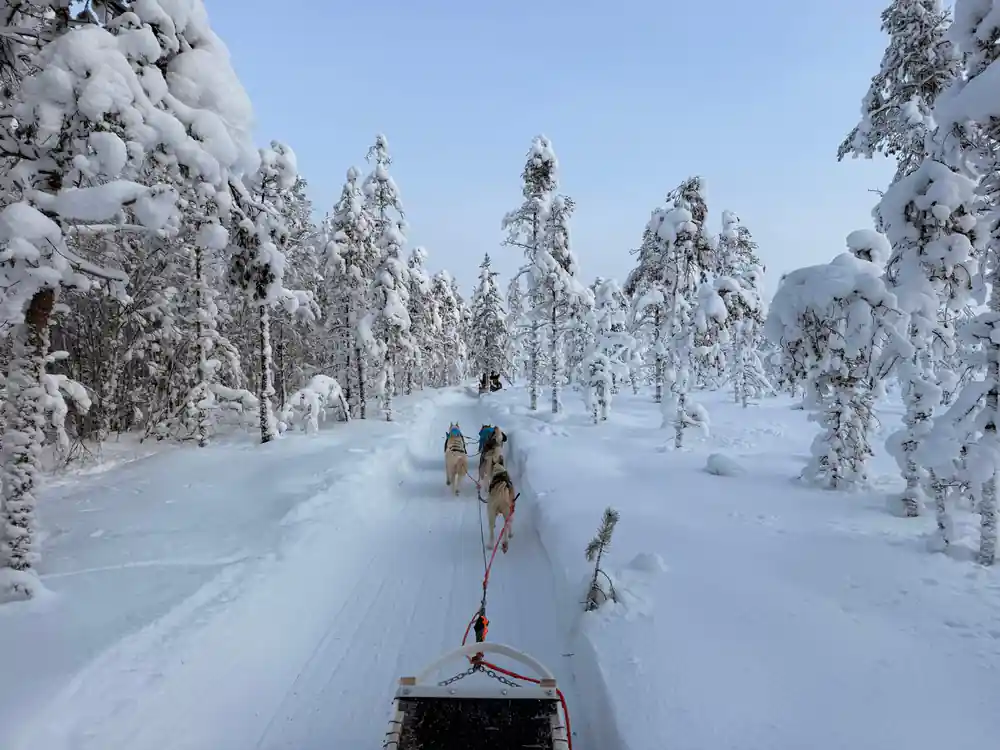
A healthy working husky can run between 40 and 50 kilometres in a single day when conditions are favourable and the dog is properly conditioned. However, Apukka structures the dogs' work to prioritise their long-term health and welfare. The 6-kilometre distance you will travel as a guest is part of a carefully managed schedule that prevents overwork while maintaining the dogs' fitness and enthusiasm. Most working dogs at the kennel complete multiple shorter runs throughout the season rather than one exhausting daily effort, allowing recovery time between efforts and reducing the risk of injury.
Training intensity varies with the season. During peak winter months when snow conditions are consistent and temperatures are stable, the dogs run regularly and maintain their conditioning. As spring approaches and snow begins to melt, running distances decrease and frequency drops off. Summer is a rest period with light exercise and swimming to maintain fitness without the stress of pulling in warm conditions. This cycle mirrors the natural working season of sled dogs in their native environment and reflects decades of accumulated knowledge about how to keep working huskies healthy and mentally engaged across multiple seasons.
40 km
A single husky team can cover up to 40 kilometers in a day across snowy terrain.
Kennel Care and Soil Renewal
Between tours, Apukka's huskies live in outdoor kennels designed for their comfort and safety in northern conditions. The kennels are equipped with shelters that protect from wind and snow, elevated platforms for sleeping, and fresh water that is checked and refreshed regularly. A critical but often overlooked aspect of kennel management is the condition of the ground itself. Soil beneath high-traffic areas can become compacted and contaminated over time, creating unsanitary conditions that increase disease risk and reduce drainage. At Apukka, the kennel soil is renewed each year, typically in spring when the snow has melted. Old soil is removed and replaced with fresh earth, eliminating accumulated contaminants and restoring proper drainage around the dog areas.
This annual renewal is labour-intensive and represents a significant commitment to the dogs' health, but it is considered essential rather than optional. The practice prevents the buildup of parasites and pathogens that would otherwise accumulate in a high-density working kennel. Between soil renewals, daily management includes removing waste, checking water supplies, monitoring each dog's condition, and providing supplementary food and rest days as needed. The dogs receive quality nutrition year-round, with dietary adjustments made based on their individual needs and the season's demands.
From Puppies to Team Members
Young huskies born at Apukka spend their first months in a separate area where they develop critical social skills through play with littermates and supervised interaction with adult dogs and humans. Around three to four months of age, puppies begin socialisation activities that introduce them to the broader kennel environment, harnesses, and the sounds and sensations they will experience during training. This early exposure is crucial for building confidence and preventing fear responses later when they are asked to run in harness for the first time. Puppies are not forced into harness training but introduced to it gradually, with positive experiences reinforcing their willingness to participate.
Formal training typically begins around six months of age, with puppies harnessed to experienced dogs in wheel or swing positions where they can learn by observation and experience without being responsible for leading the team. A young dog may complete only one or two very short runs during their first training season, sometimes just a few hundred metres, enough to teach them the basics of running forward, responding to commands, and working as part of a team without overwhelming them physically or mentally. By their second winter, assuming they show aptitude and enthusiasm, they are ready for longer runs and more demanding positions. This developmental approach means that every adult dog at Apukka has been graduated through a training system designed to build competence and confidence rather than force compliance.
Winter Coats and Sleeping in Deep Cold
One of the most striking adaptations of a sled dog is its coat, which is far thicker and more complex than the fur of most dog breeds. Huskies have a double coat consisting of a dense undercoat and longer guard hairs on the outside. The undercoat is so dense that it is difficult to push your fingers through to the skin, creating an insulating layer that traps warm air close to the body. During winter, this coat grows even thicker as days shorten and temperatures drop, a natural response to environmental cues that does not depend on conditioning or nutrition. The guard hairs shed water and snow, preventing moisture from penetrating to the skin, which is critical for survival in wet snow conditions where moisture would otherwise cause rapid heat loss.
This coat allows huskies to sleep outdoors in sub-zero temperatures that would be dangerous for most dogs. A husky curled tightly, with its tail wrapped around its nose and body, can maintain core body temperature indefinitely in conditions as cold as minus 50 degrees Celsius, provided they have adequate nutrition and are not wet. At Apukka, dogs sleep outdoors year-round when conditions are cold and stable, and this natural behaviour contributes to their robustness and mental well-being. The outdoor environment keeps their coat in optimal condition and maintains the seasonal cycle their bodies expect. During your petting time before or after your ride, you can feel the density and quality of this remarkable coat firsthand.
Ready to Run with Your Pack?
from US$253Reserve now & pay later