The quick version
- Husky paws have specialized circulation that prevents freezing, allowing them to run safely across snow and ice for hours without injury.
- A thick double coat traps insulating air close to the skin, keeping huskies warm even in extreme Arctic temperatures below minus thirty.
- A team of six huskies can pull a loaded sled at impressive speeds, combining strength with endurance that few other dog breeds can match.
- Working sled dogs are capable of covering remarkable distances in a single day, bred and conditioned for sustained Arctic running.
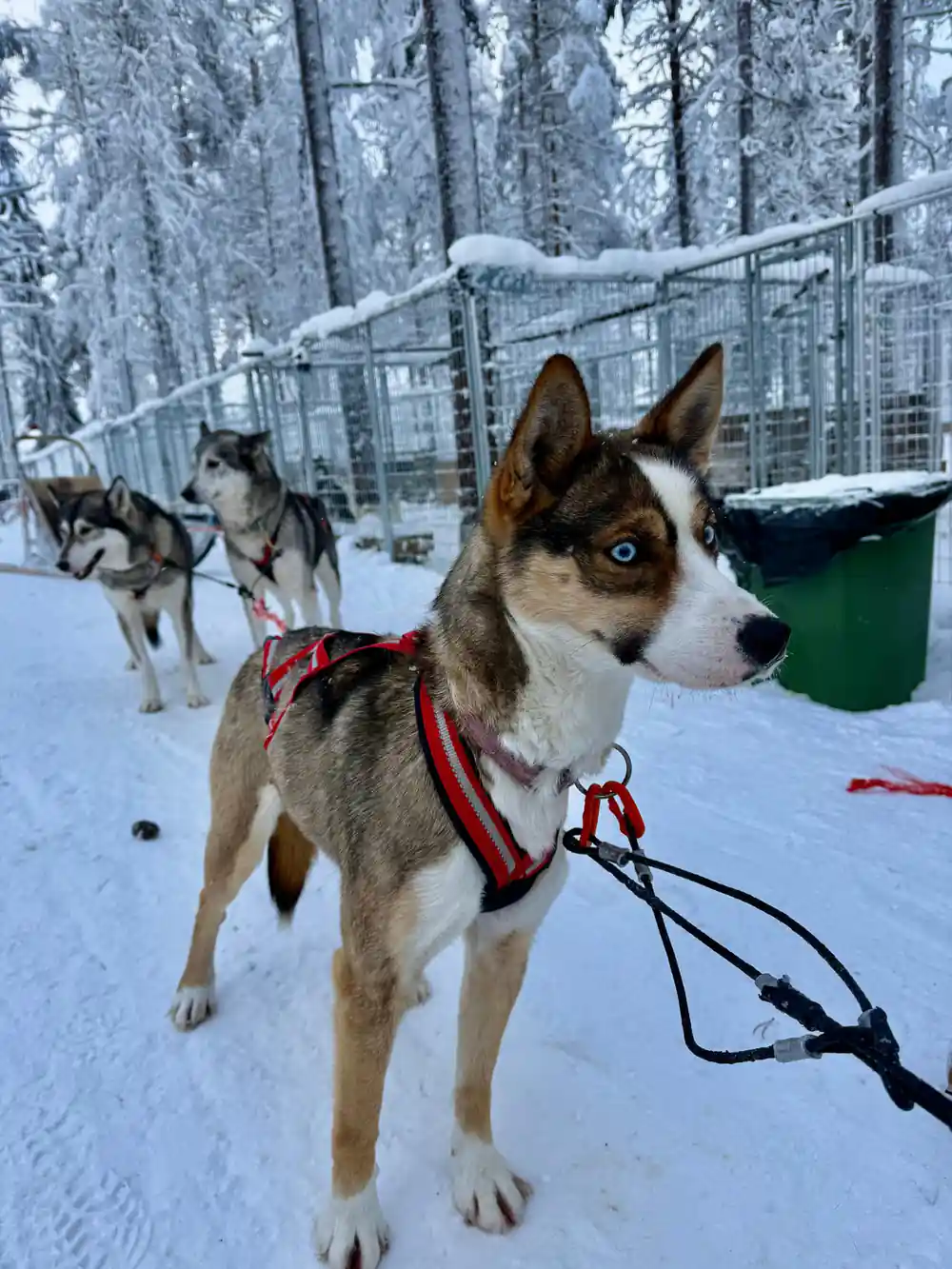
- Many huskies have striking blue eyes or mismatched eye colors, a genetic trait tied to their Arctic heritage and coat patterns.
The Arctic Paw: Counter-Current Heat Exchange
A husky's paw is a masterpiece of thermal engineering, built to function on snow and ice that would paralyze other dogs within minutes. The secret lies in a system called counter-current heat exchange, where warm arterial blood flowing into the foot runs directly alongside cold venous blood returning from the paw. This arrangement transfers heat from the outgoing blood to the incoming blood, keeping the paw pad just warm enough to remain flexible while minimizing heat loss to the frozen ground. The result is a paw that can tolerate temperatures well below minus twenty degrees Celsius without frostbite.
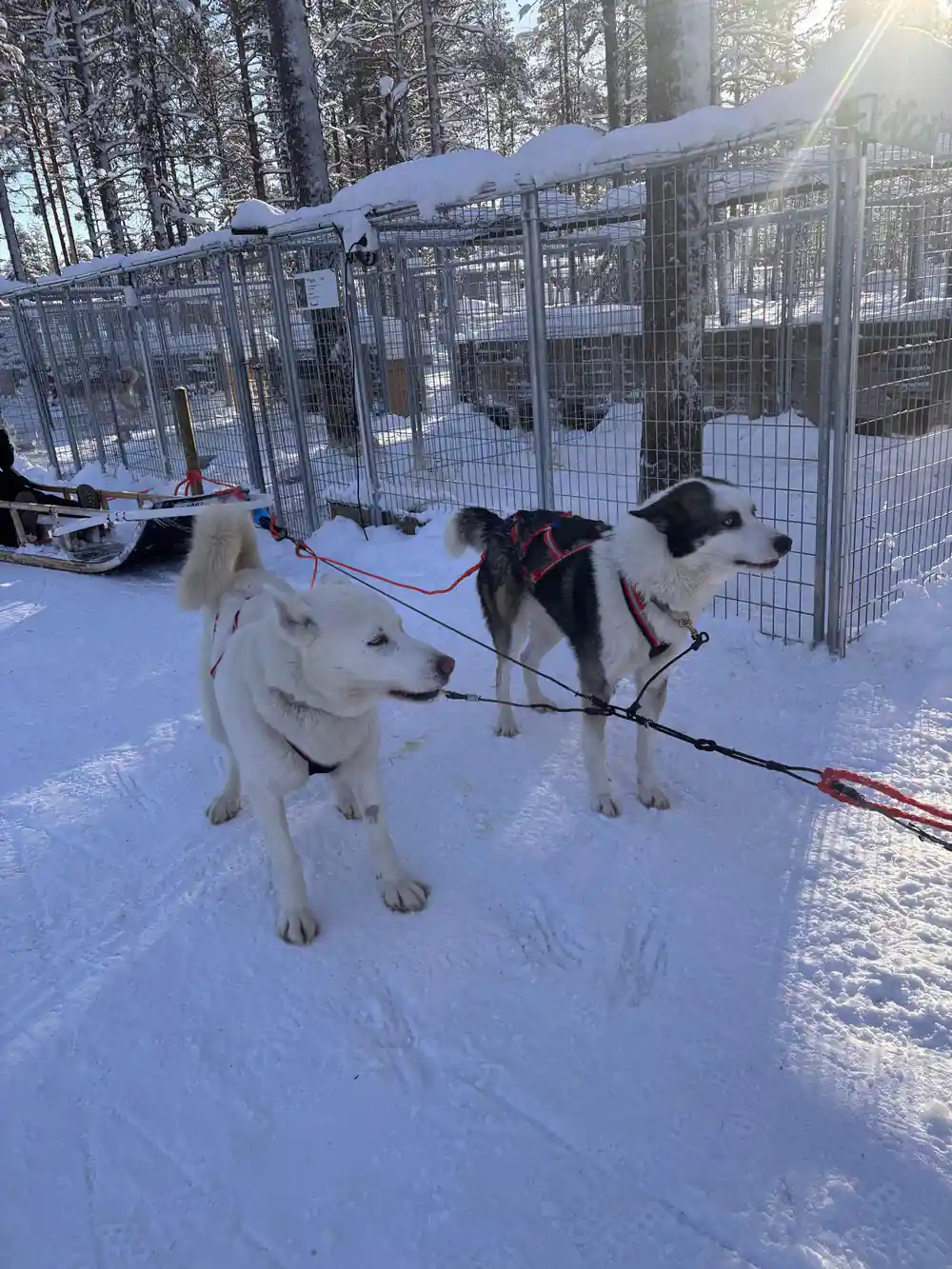
The paw pad itself is uniquely adapted. Husky pads are thicker and tougher than those of other dog breeds, with ridged surfaces that grip ice like a mountaineer's crampon. Between the toes, dense fur grows inward, trapping warm air and shedding snow before it can pack into ice balls. During the 6 km husky ride at Apukka, your team's dogs will be running at a steady pace where this cooling system works at peak efficiency, their paws barely slowing despite the frozen terrain beneath them. This is not a system that evolved for short sprints; it evolved for the endurance runs that define sled dog work across the Arctic.
Double Coat Insulation: Guard Hairs and Undercoat
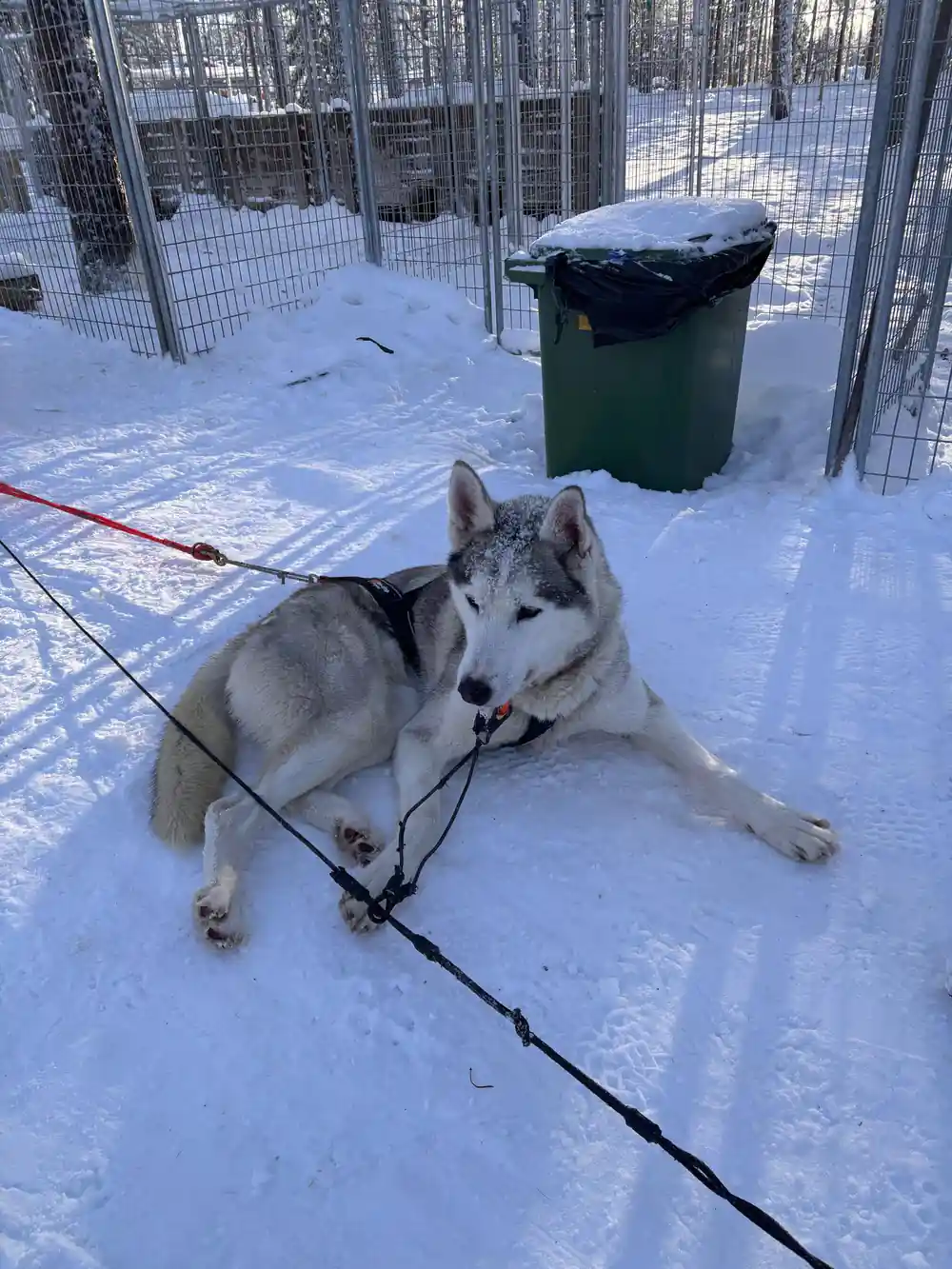
Beneath the visible outer fur of a husky lies one of nature's most effective insulation systems. The double coat consists of two distinct layers: long guard hairs on top that shed water and wind, and a dense undercoat beneath that traps air in a thick, warm layer. The undercoat can be four to five centimeters deep during winter months, creating a barrier so effective that snow falling on a husky's back will not melt, even in direct sunlight. This trapped air functions the same way as foam insulation in a building, slowing the transfer of heat from the dog's body to the frigid air outside.
The guard hairs serve a protective role beyond insulation. They repel moisture and wind, keeping the undercoat dry. A wet undercoat loses its insulating properties entirely, so this outer layer is critical to survival in Arctic conditions where temperatures dip below minus thirty degrees Celsius. The huskies you work with at Apukka have been selected and bred for generations specifically for this trait. Their coats are thickest in winter, thinning significantly in spring. During your adventure, you will see firsthand how these dogs barely show signs of exertion despite the cold, their bodies maintained at a stable, warm core temperature by this biological investment.
Husky paw on ice: built to grip, insulated to endure
The Sled Dog Metabolism: Built for Fat Burning
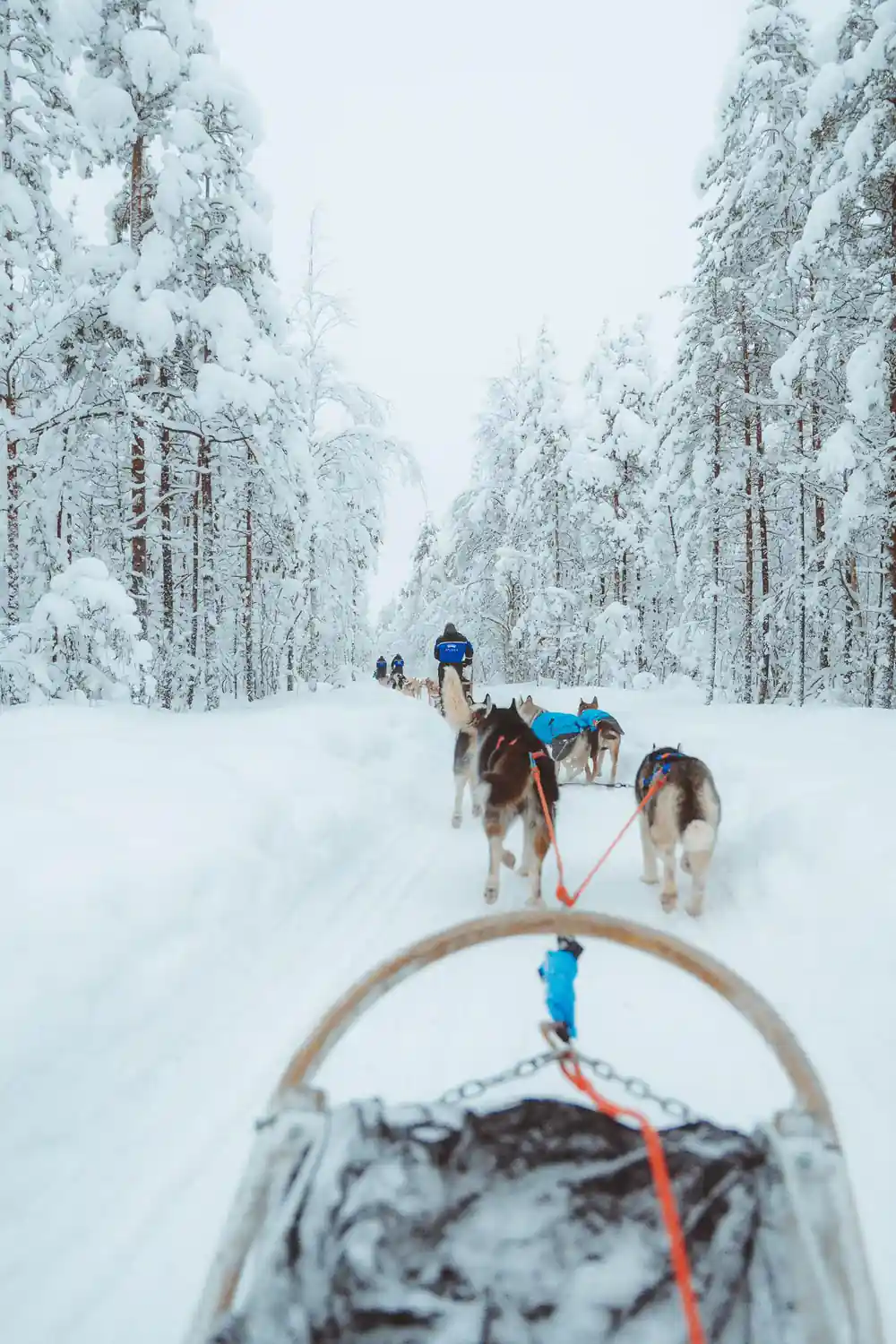
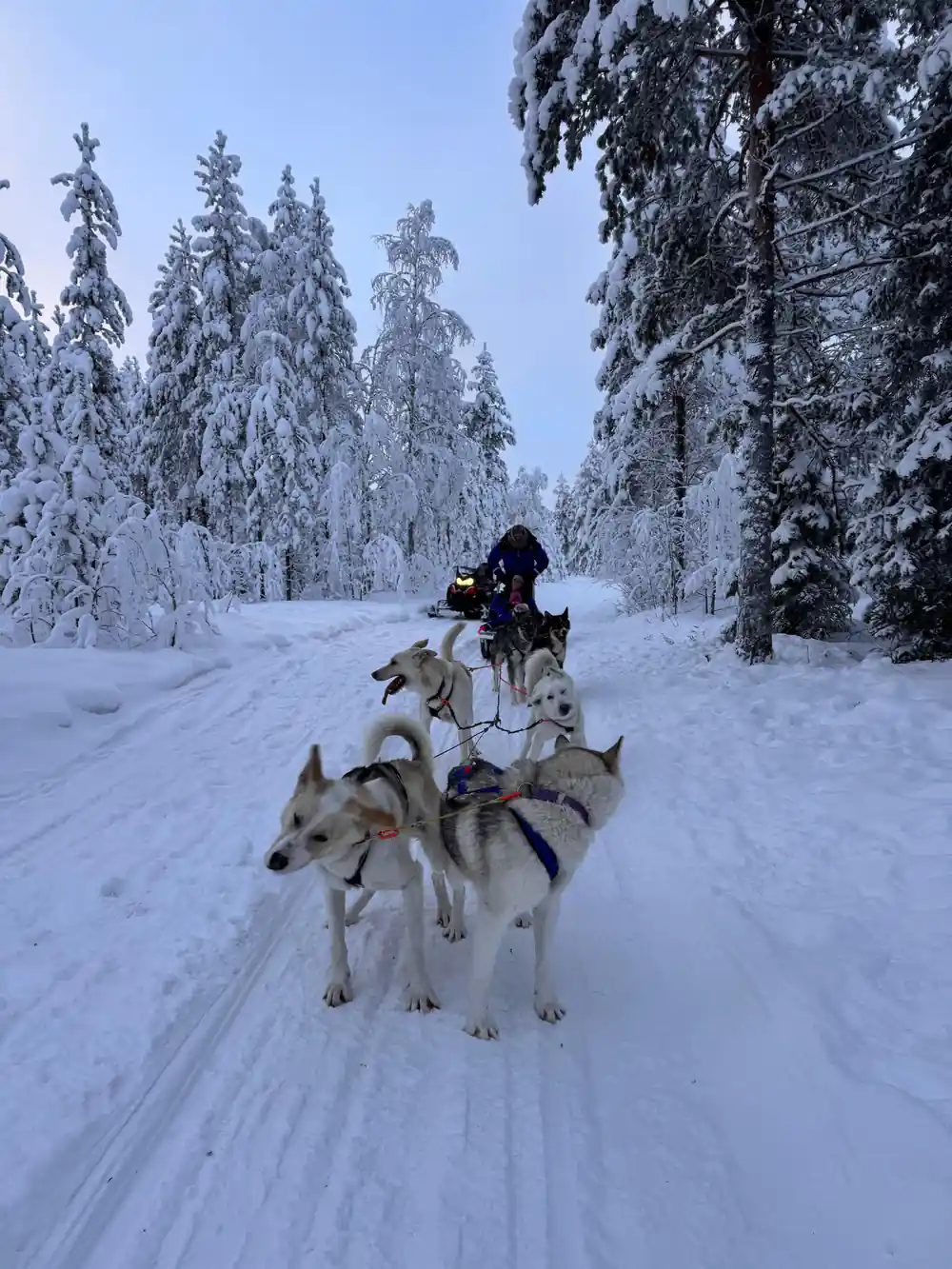
A working husky's metabolism is fundamentally different from that of a pet dog or other dog breeds. Sled dogs have evolved to burn fat at extraordinary rates, converting stored energy into the sustained power needed to pull loaded sleds across vast distances. Their muscle tissue contains a higher proportion of slow-twitch fibers, which are designed for endurance rather than explosive speed. These fibers rely primarily on fat oxidation, allowing a husky to work for hours without fatigue. A team of six huskies can maintain a pulling pace of 15 to 20 kilometers per hour for eight hours or more, a feat that requires metabolic machinery purpose-built for the job.
This metabolic specialization means huskies require more calories than other dogs of the same weight, but those calories should come from fat and protein, not carbohydrates. During a working day, a sled dog may burn 10,000 calories or more, a number that seems extreme until you consider the sustained muscular effort and the energy cost of maintaining body heat in sub-Arctic temperatures. On the 3 hour 30 minute Apukka experience, your huskies will work at a measured pace, and their bodies will be optimized to perform at this level. Their lineage stretches back through countless generations of Arctic runners, each ancestor selected for this one extraordinary ability: to convert fuel into motion hour after hour.
Heat Dumping: How Huskies Cool Themselves
Despite their insulation, huskies generate substantial internal heat during sustained running. A dog working hard can produce so much metabolic heat that overheating becomes a real risk, even in Arctic temperatures. Huskies have evolved multiple strategies to dump excess heat without losing the core warmth they depend on for survival. The primary method is panting, which increases evaporative cooling from the lungs and mouth. During high effort, a husky's respiratory rate can increase dramatically, allowing warm air and moisture to leave the body while cool air enters the lungs.
A secondary heat-dumping mechanism involves increased blood flow to the ears and the pads of the feet, where blood vessels dilate to release heat to the environment. The ears in particular have thin skin and poor insulation, making them ideal radiators. You may notice during your Apukka ride that the huskies' ears flush pink as they work, a visible sign of blood vessels opening to dissipate warmth. The nose also becomes a heat dump site, which is why a working husky's nose is often warm to the touch. This elegant system allows the dog to shed dangerous levels of heat during intense effort while maintaining the core body temperature needed for survival in the frozen landscape around them.
100 km
A working husky can cover up to 100 kilometers in a single day across frozen terrain.
Snow Eating: Why Huskies Drink While Running
One of the most striking behaviors observers notice during husky sled runs is the dogs' habit of eating snow while in motion. This is not a quirk or sign of poor training; it is a purposeful strategy to maintain hydration during work. A husky running hard in cold, dry Arctic air loses moisture continuously through panting and respiration. Drinking from a snow bank or catching snow in their mouths as they run is an efficient way to replace that lost fluid without stopping. The snow is already at body temperature inside the mouth, so the energy cost of warming it is minimal compared to drinking liquid water, which would cool the core.
This behavior serves another function: thermoregulation. Eating snow provides a modest internal cooling effect, helping to offset the heat generated by sustained muscular work. For a sled dog working in temperatures that may hover near minus twenty degrees Celsius, this balance between heat production and heat loss is a constant physiological negotiation. The dogs you encounter at Apukka have performed this behavior thousands of times, their instincts honed by genetics and training. What might appear casual to an observer is actually a sophisticated response to the demands of Arctic running, a small behavior that contributes significantly to the dog's ability to work safely and effectively across long distances.
Blue and Mismatched Eyes: Genetics and Vision
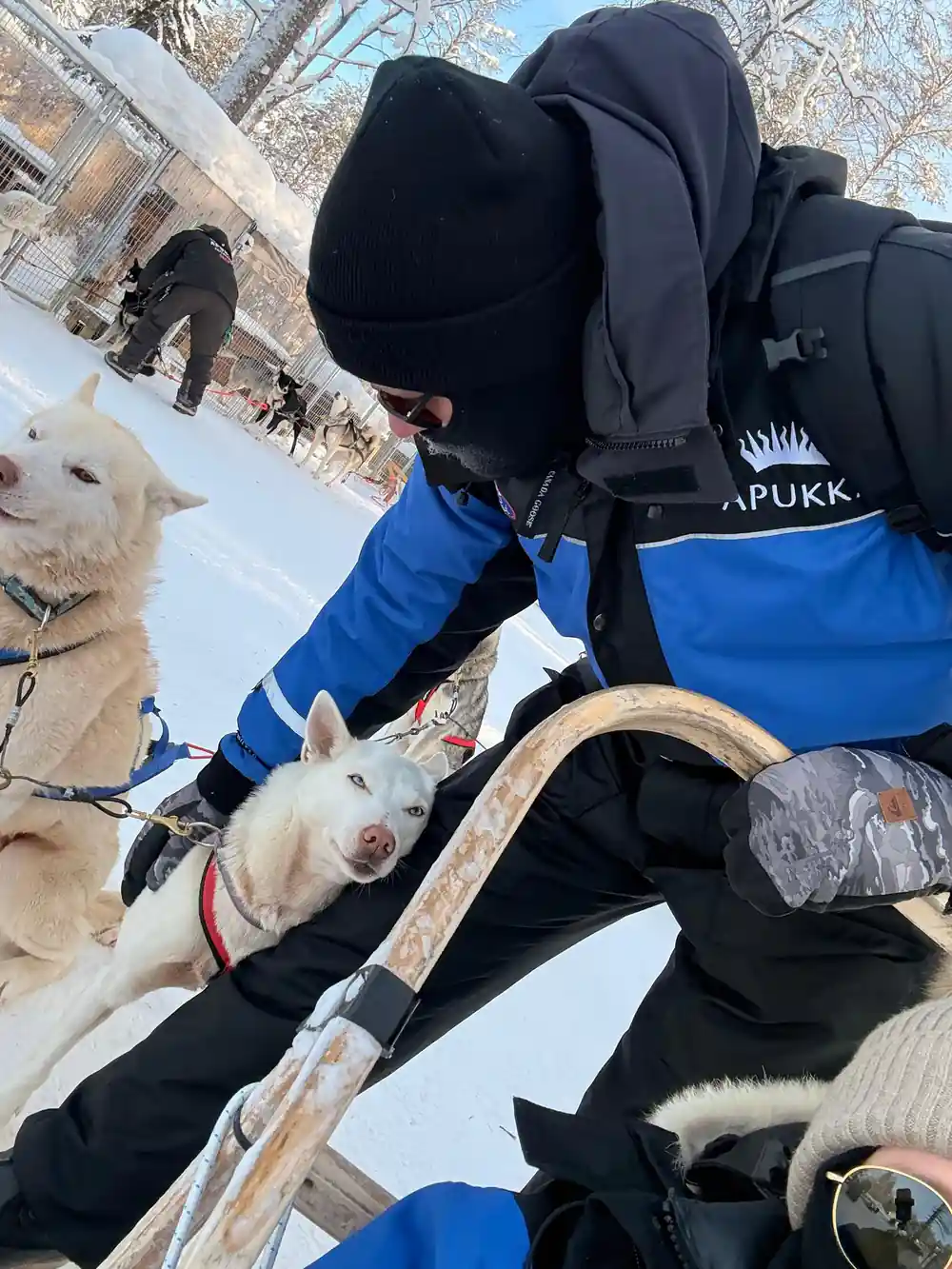
Many huskies have striking blue eyes, and some have one blue eye and one brown eye, a condition called heterochromia. This trait is purely genetic, tied to the distribution of melanin in the iris. Blue eyes in huskies are the result of lower melanin concentration, allowing light to scatter and reflect blue wavelengths back to the observer. Brown eyes contain more melanin, which absorbs light and produces the typical dark color seen in most dog breeds. The genes that control eye color in huskies are incompletely dominant, meaning a dog can inherit the blue-eye allele from one parent and the brown-eye allele from the other, resulting in mismatched eyes.
The color of a husky's eyes does not affect their vision or their ability to work in Arctic conditions. Huskies of all eye colors see equally well in low light, an adaptation tied to their Arctic heritage where winter daylight is severely limited. Their vision is optimized for detecting movement and navigating snowy terrain, not for distinguishing colors the way humans do. The striking appearance of blue or mismatched eyes is simply a visible marker of the genetic diversity within the husky breed, a diversity that has been maintained because it has no negative effect on working ability. When you meet the huskies at Apukka, you will likely encounter dogs with a range of eye colors, each pair reflecting the breed's unique genetic history.
Breeding for Arctic Survival: Generations of Selection
Every husky working today is the product of generations of selective breeding for survival in one of Earth's harshest environments. The Chukchi people of northeastern Siberia developed the husky breed over centuries, keeping only dogs that demonstrated exceptional cold tolerance, endurance, and the metabolic capabilities described above. A dog born weak or poorly insulated did not survive to breed, creating a continuous filter for the traits that matter in Arctic conditions. This intense selection pressure over hundreds of years has produced a breed so specialized for cold-climate endurance that they are virtually unmatched by any other canine.
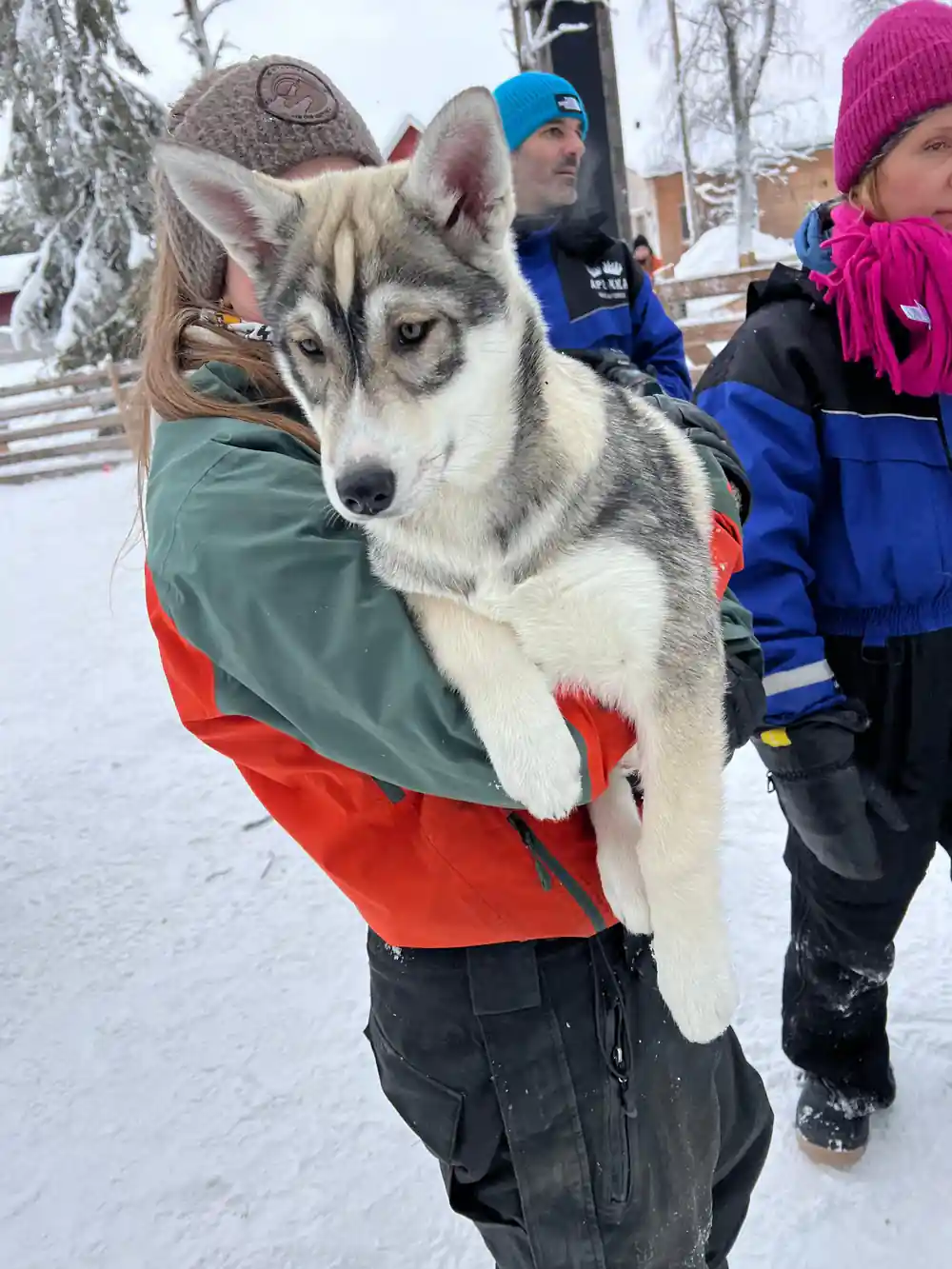
Modern huskies still carry this genetic legacy. The dogs at Apukka have been selected not only for their ancestry but for their individual suitability for sled work. Breeders assess pups for muscle development, coat quality, temperament, and working drive, choosing only the best animals to continue the line. This means that when you harness up for your 6 km ride, you are working with the product of centuries of intentional genetic selection. Every aspect of their physiology, from the counter-current circulation in their paws to the fat-burning metabolism of their muscles, exists because their ancestors survived and thrived in conditions that would have killed less specialized breeds. The husky is not simply a dog adapted to cold; it is a cold-adapted specialist, refined by survival itself.
See Arctic Athleticism in Action
from US$253Reserve now & pay later